Staring at a bag of raw shrimp and wondering how to devein shrimp without a mess? Slit the back lightly with a paring knife, lift out the dark line, then rinse. It speeds up with every shrimp.
For more kitchen basics, browse the seafood cooking section of this site.
| Item | Value |
|---|---|
| Minimum internal cooking temperature | 145 degrees |
| Cold rinse after cleaning | about 1 minute |
| Cleaned shrimp in the refrigerator | two days |
| Cleaned shrimp in the freezer | up to 1 month |
| Defrosting under cool running water | about 3 to 5 minutes |
These figures come from WIC Health’s page on preparing shrimp and Jessica Gavin’s peel-and-devein guide. Guidance can change, so check the source before you rely on the numbers.
Do you have to devein shrimp?
Technically, no. A professional kitchen guide says shrimp are safe to eat with the vein intact, yet it still calls deveining best practice in professional kitchens.
The dark line is the digestive tract. The same guide notes it can contain grit that affects both texture and presentation, especially in larger shrimp.
A second, paler vein runs along the underside near the legs. It is a blood vessel, and one cook’s tutorial says leaving it in causes no texture or flavor problems.
Use this rule of thumb to decide:
- Large or jumbo shrimp: remove the vein, because it can be bigger and may give a sandy texture.
- Small or medium shrimp: skipping it is a matter of taste, and some cooks never bother.
- Raw dishes: remove it every time, since the same tutorial warns of a gritty texture or bitter taste in raw nigiri or sashimi.
If you plan to serve shrimp raw or citrus-cured, sourcing matters as much as prep, so read about sushi grade fish for ceviche as well.
Set up and peel shrimp by hand
Start with a rimmed pan of ice. When you peel in large batches, keep the shrimp on ice to stay out of the temperature danger zone and protect quality.
For a first attempt, shrimp no smaller than about 41-50 pieces per pound are easier to handle, according to a cleaning tutorial.
Then work through each shrimp in this order:
- Remove the head, if attached. Hold the shrimp firmly and twist the head off just behind the gills.
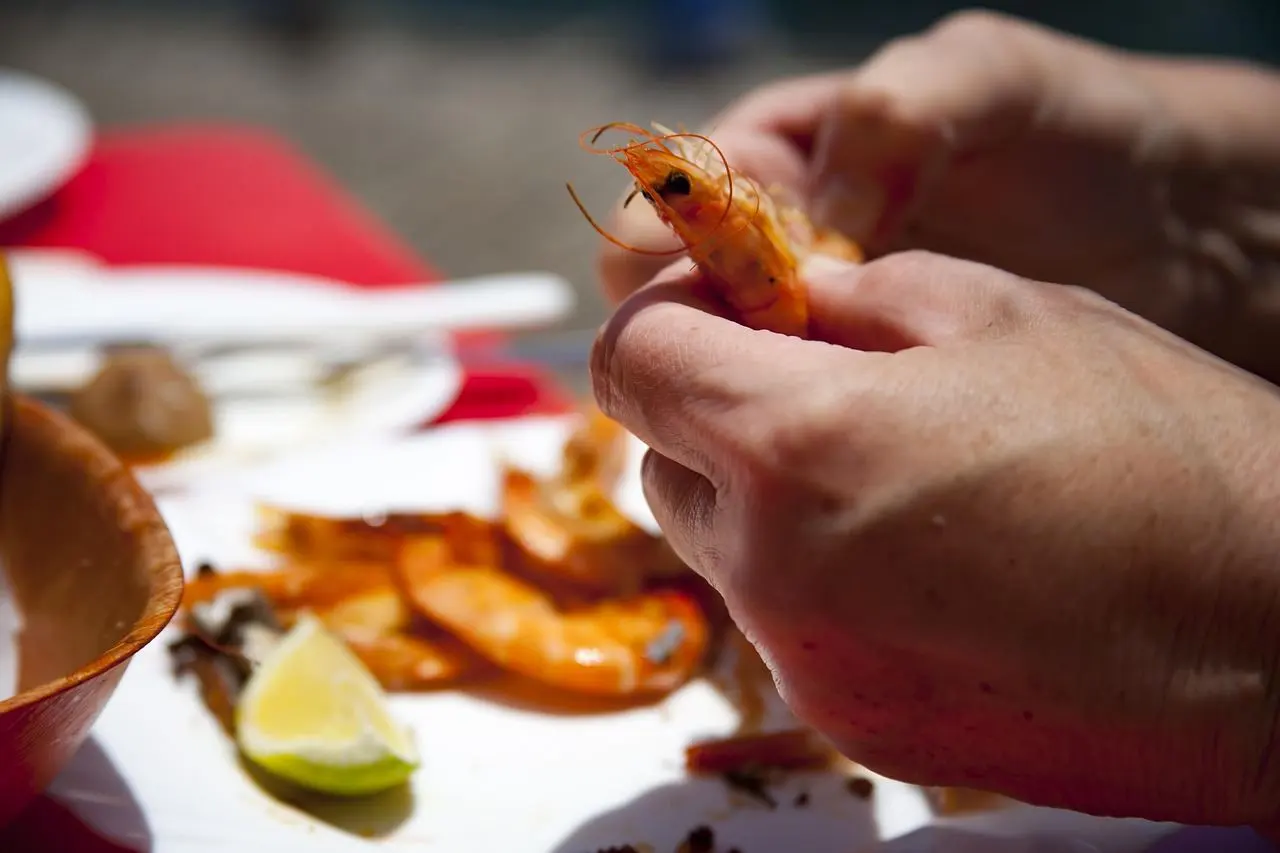
- Loosen the shell. Starting at the legs, gently pull the shell away from the body.
- Peel toward the tail, using your thumbs to get under each shell segment.
- Decide on the tail. For tail-on shrimp, pinch and pull the shell off while leaving the tail fan intact; for fully peeled shrimp, give the tail a gentle tug.
- Rinse lightly only if shell debris remains, then pat dry.
Save the shells. They are full of flavor and make a quick seafood stock or sauce later on.
How to devein shrimp once the shell is off
A peeled shrimp is the easiest case, because you can see the line and nothing blocks the knife. A paring knife is the usual tool.
- Lay the shrimp on a board with the curved back facing up.
- Slice gently along the back with the paring knife, just deep enough to expose the vein.
- Lift the vein out with the tip of the knife or with your fingers, and discard it.
- Rinse the shrimp briefly, then pat it dry before cooking or storing.
Here is a small tidiness trick: stick each vein on a folded, wet paper towel at the corner of your board so it stays put.
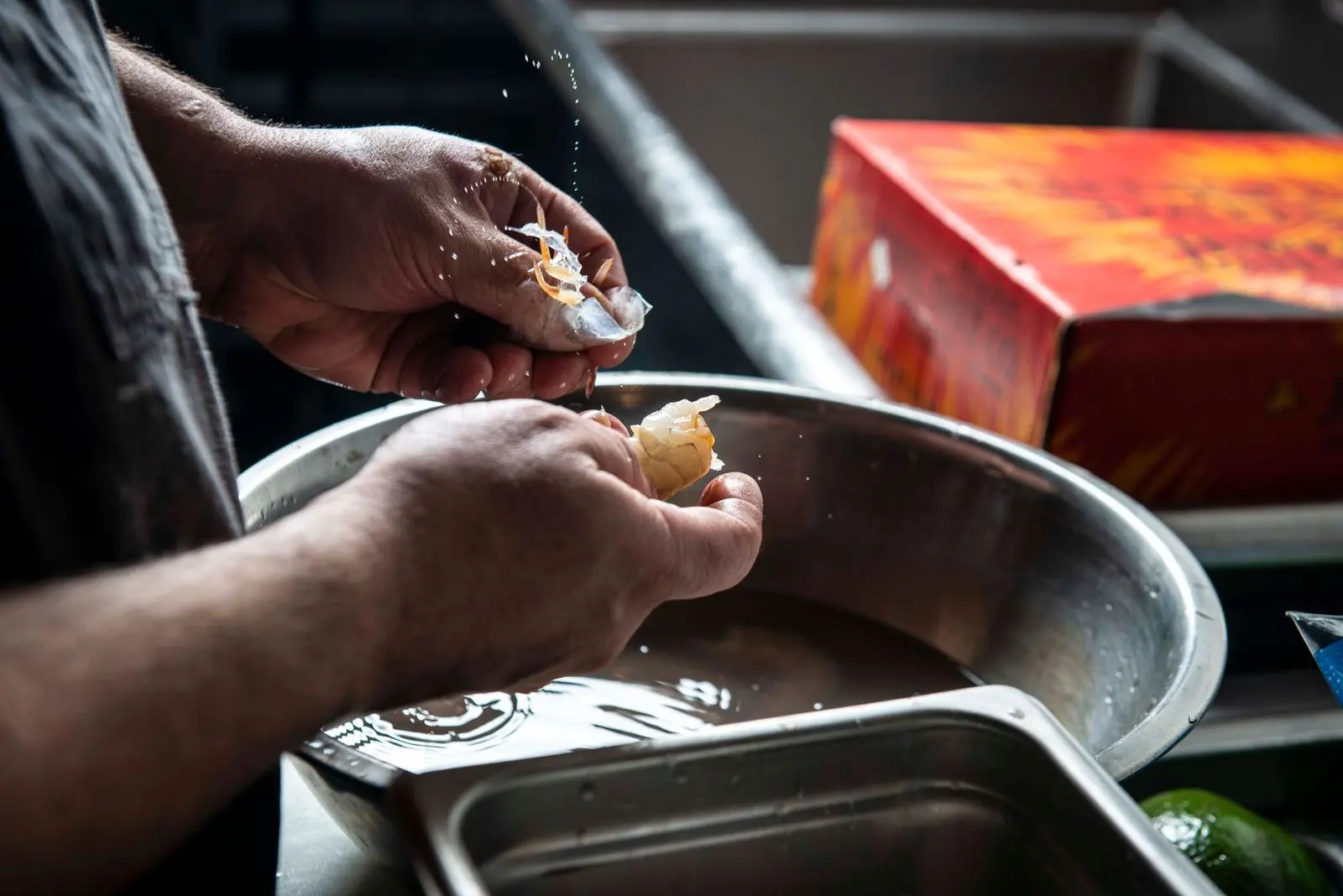
How to devein shrimp with the shell on
Shell-on deveining suits grilled or butter-poached dishes, where the shell protects the meat and adds flavor. You have three practical routes:
- Knife: make a shallow incision along the back, cutting through the shell and just into the flesh, then pull the vein out and leave the shell intact.
- Kitchen shears: cut along the back of the shrimp, then open the cut and remove the vein with your fingers.
- Toothpick: slide it under the vein at a joint between shell segments, lift gently and pull the vein out in one piece.
The knife method comes from a restaurant-supply prep guide, the shears from a culinary-science site, and the toothpick from a home-cooking tutorial.
Choosing a tool: knife, shears, toothpick or deveiner
You do not need special gear. A paring knife works just fine, and a dedicated deveiner is popular in professional kitchens mainly for speed and consistency when breaking down large volumes, as that kitchen guide explains.
If you do buy one, a food-media explainer describes a shrimp deveiner as a thin plastic tool with a curve at the tip. Cooks who only prepare shrimp on special occasions can skip it.
Rinse, dry, store and cook
After cleaning, move the shrimp to a colander and rinse well with cold running water for about 1 minute. Then drain thoroughly and pat dry with paper towels, which matters most for sauteing, stir-frying and roasting, where less surface moisture gives better browning. Both steps come from Jessica Gavin’s guide.
The same guide says cleaned shrimp keep in an airtight container in the refrigerator for two days. Spread in a single layer in a resealable bag, they freeze for up to 1 month, and you defrost them in a colander under cool running water in about 3 to 5 minutes.
For safety, WIC Health advises washing your hands and any utensils that touch the shrimp in hot soapy water. It also says shrimp should reach 145 degrees inside, and that done shrimp look opaque and pink.
Citrus-cured dishes follow different rules. One cleaning guide advises limiting marinade time so the texture does not turn too firm or chalky. Once your shrimp are clean, the next step is covered in how to cook shrimp for ceviche.
Frequently asked questions
Is it easier to devein shrimp before or after cooking?
Show answer
Before. Raw shrimp is translucent and pliant, so the dark line shows clearly and the flesh cuts easily, according to the home-cooking tutorial. Once cooked, the meat turns opaque and the line becomes fragile.
How can you tell if store-bought shrimp are already deveined?
Show answer
Look at the back. The same tutorial says an uncleaned shrimp shows a dark line from head to tail, while most deveined ones from the grocery store carry a butterfly cut where the intestine was removed.
Should you peel shrimp before cooking?
Show answer
It depends on the dish. The professional kitchen guide says peeled shrimp cook faster and take up marinades more easily, while shell-on shrimp hold more moisture and flavor.
Does a toothpick work on small shrimp?
Show answer
Yes. A food-media guide says the toothpick works on any size but suits small shrimp best, since they would otherwise be nearly impossible to clean. Expect it to take patience and practice.