You love ceviche but worry about raw fish. So, is ceviche safe to eat? Only as safe as the fish you start with: lime juice cuts Vibrio well, Salmonella and parasites less so.
This guide sits within the seafood cooking section, which looks at how raw and cooked fish behave in the kitchen.
| Item | Value |
|---|---|
| Salmonella on fish, lime marinade at 25°C | Mean 0.8 log reduction |
| Salmonella on fish, lime marinade at 4°C | Mean 2.1 log reduction |
| Vibrio parahaemolyticus on fish at 25°C | >4.5 to >5.2 log reduction |
| Vibrio parahaemolyticus on fish at 4°C | >3.5 to >4.3 log reduction |
| Longest marinating time tested | Up to 150 minutes |
| Lime juice alone, no fish | More than 5 log reductions |
These figures come from a Rutgers University thesis on lime juice and ceviche. They are lab results and can change as research moves on, so check the source before you rely on them.
What does lime juice actually do to raw fish?
When an acidic marinade meets the myosin proteins in fish muscle, they coagulate, and the flesh turns firmer and opaque. In its article of August 31, 2022, America’s Test Kitchen described this as gentler than heating, which is why the texture stays tender and moist.
In a short marinade only the surfaces of the pieces change, while the centers stay translucent. A longer soak lets the acid work through to the middle. The chemistry of that texture change is explored further in this guide to does lime juice cook fish.
A texture change is not the same as a safety step. The Rutgers thesis points out that no ingredient in ceviche is cooked in the conventional sense of applying heat, and that lime juice is the sole means of controlling risk in ceviche recipes. That makes the acid your only safeguard, so it matters how well it performs.
How well does lime juice kill bacteria?
Researchers at Rutgers University tested this directly, targeting Vibrio parahaemolyticus and Salmonella enterica. According to the thesis, samples were incubated at room temperature (25°C) and refrigeration temperature (4°C) for time intervals up to 150 minutes.
The work was later reported in the Journal of Food Protection in June 2013. As summarized by barfblog, tilapia fillet pieces were deliberately loaded with both bacteria and then exposed to fresh lime juice at concentrations typical for ceviche.
The results, as given in the Rutgers thesis:
- Vibrio: at room temperature, log reductions varied from >4.5 to >5.2 (Rutgers).
- Vibrio in the fridge: log reductions varied from >3.5 to >4.3 (Rutgers).
- Salmonella: a mean log reduction of 0.8 at 25°C and 2.1 at 4°C (Rutgers).
A log reduction is a tenfold drop in bacterial counts, so each extra log is a far bigger cut than the last. By that yardstick Vibrio was nearly wiped out, while Salmonella was not.
Lime juice on its own, without any fish, produced more than 5 log reductions in both bacteria, according to the thesis. The fish flesh itself therefore changed the outcome for Salmonella.
Where lime juice falls short
On tilapia, Salmonella strains were much more resistant and were only slightly reduced, at roughly a 1- to 2-log reduction, as barfblog summarized the paper. Vibrio, by contrast, fell to about a 5-log reduction under every condition studied.
The authors’ own verdict, quoted in the thesis, is that preparing ceviche reduces Vibrio parahaemolyticus risk significantly but is less effective for control of Salmonella. Food safety writer Douglas Powell put his takeaway more bluntly in his post on the study: raw is risky. He said he would pair lime with a mild heat treatment for any seafood.
Parasites are a separate problem. America’s Test Kitchen’s article says short-term acid exposure has an antimicrobial effect, but it is not nearly as effective as heat, especially when it comes to killing parasites.
The risk is not only theoretical. The Rutgers thesis notes confirmed cases of cholera in Peru, New Jersey and Florida associated with ceviche.
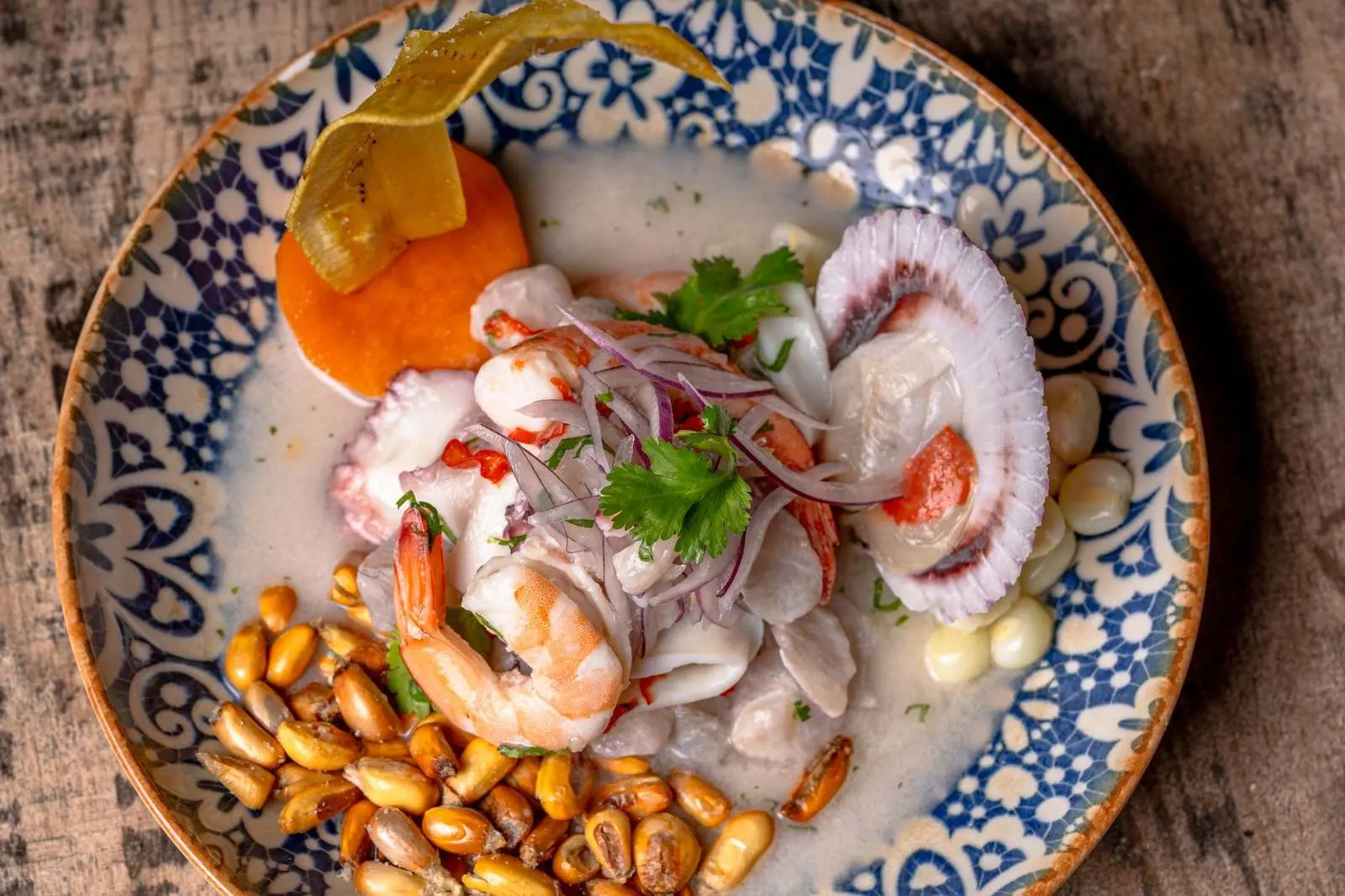
Steps to lower your risk at home
Since the marinade cannot rescue a poor ingredient, most of your protection happens before the lime comes out. Based on the America’s Test Kitchen advice, here is a practical order of operations:
- Judge the fish first. Make ceviche only with fish you would be fully comfortable serving raw.
- Pick saltwater species. Buy the freshest saltwater fish, not freshwater, from a fishmonger you trust, and look or ask for a “sushi-grade” label if possible.
- Keep it cold. Marinate in the refrigerator for anywhere from a few minutes to a few hours, as the method calls for.
- Serve promptly. Serve it as soon as you can rather than letting it sit.
Refrigeration also helped in the lab: Salmonella fell further at 4°C than at 25°C in the Rutgers tests. Leftovers bring their own questions, which the guide on how to store leftover ceviche covers.
When ceviche is not safe to eat
America’s Test Kitchen’s advice is plain: do not serve ceviche to pregnant or immune-compromised people. Because lime juice leaves Salmonella partly intact, a longer marinade does not change that guidance.
If someone at your table falls into either group, a fully cooked seafood dish is the safer choice. Everyone else can enjoy ceviche, provided the fish, the cold chain and the timing are right.
Frequently asked questions
Can lime juice make raw fish completely safe?
Show answer
No. The research shows a strong effect on Vibrio but a weak one on Salmonella when the fish is present, and acid is a poor tool against parasites. Treat the dish as raw fish.
Does a longer marinade make ceviche safer?
Show answer
Not reliably. In the Rutgers work, Vibrio counts were already below the detection limit at the shortest times studied, while Salmonella stayed hard to control. A longer soak mostly makes the fish firmer and opaque all the way through.
Is it fine to use any fish I have on hand?
Show answer
Only if you would happily eat it raw. The fish quality sets the ceiling for safety, and the America’s Test Kitchen guidance favors fresh saltwater species from a trusted seller.
Can pregnant women eat ceviche?
Show answer
The advice from America’s Test Kitchen’s August 31, 2022 article is not to serve it to pregnant or immune-compromised persons. A cooked dish avoids the question entirely.