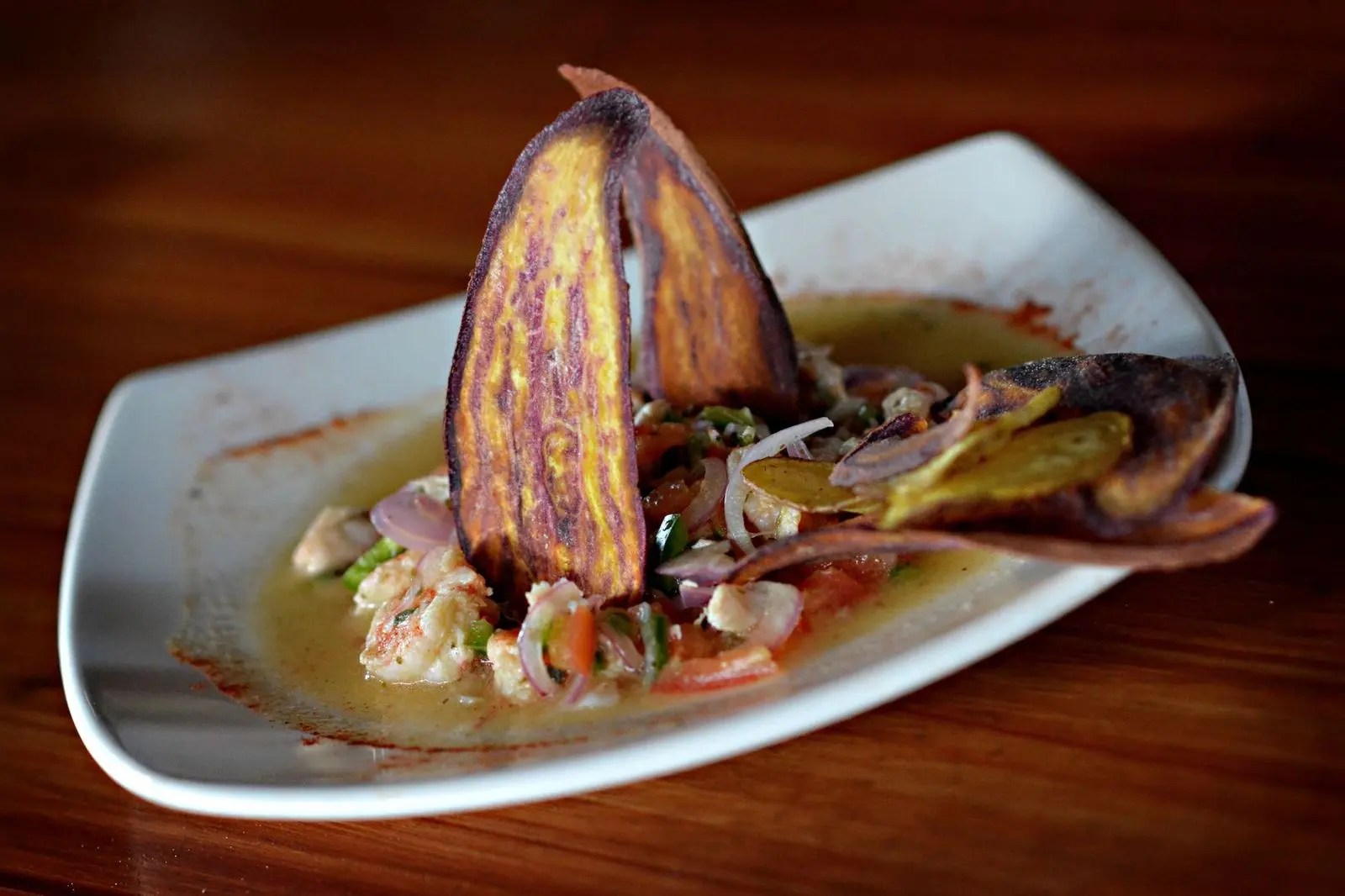
Wondering how long to marinate ceviche so it turns out silky, not rubbery? Refrigerate cut fish in an acidic marinade for a few minutes to a few hours: shorter keeps the centers translucent, longer makes them opaque and firm.
This guide sits inside the seafood cooking collection on this site.
| Item | Value |
|---|---|
| Marinating window | A few minutes to a few hours, refrigerated |
| Short marinade | Surfaces change, centers stay translucent |
| Long marinade | Opaque all the way through, firmer texture |
| Fish type | Saltwater fish, not freshwater |
| Serving | As soon as you can after marinating |
| Who should skip it | Pregnant or immune-compromised persons |
These points come from America’s Test Kitchen’s Aug. 31, 2022 explainer. Guidance can change, so check the source before you rely on it.
What happens to fish while it marinates?
When the acidic marinade meets the myosin proteins that make up fish muscle, those proteins coagulate and bond together. The muscle turns firmer and opaque, according to America’s Test Kitchen.
That process is gentler than heat, so the fish stays tender and moist instead of drying out. The Takeout’s Feb. 9, 2025 piece describes the same change as denaturing, which is similar to cooking food with heat.
So the marinating time is really a dial. It controls how far the acid has travelled into each piece of fish, and that decides the texture on your fork.
How long to marinate ceviche for each texture
The sources give a range rather than a stopwatch: a few minutes to a few hours in the fridge, using small, bite-size chunks of raw filleted fish. Where you land inside that range is a matter of taste.
- Short marinade: only the surfaces of the pieces are transformed, while the centers are still translucent. This is the closest to raw fish.
- Long marinade: the acid diffuses through until the fish is opaque all the way through. The texture is firmer and loses the slightly tacky smoothness of raw fish.
- In between: a mix of both, with a firm outer layer and a softer middle.
Piece size matters too. Since the acid has to travel from the outside in, smaller, even chunks reach the middle sooner than large, uneven ones.
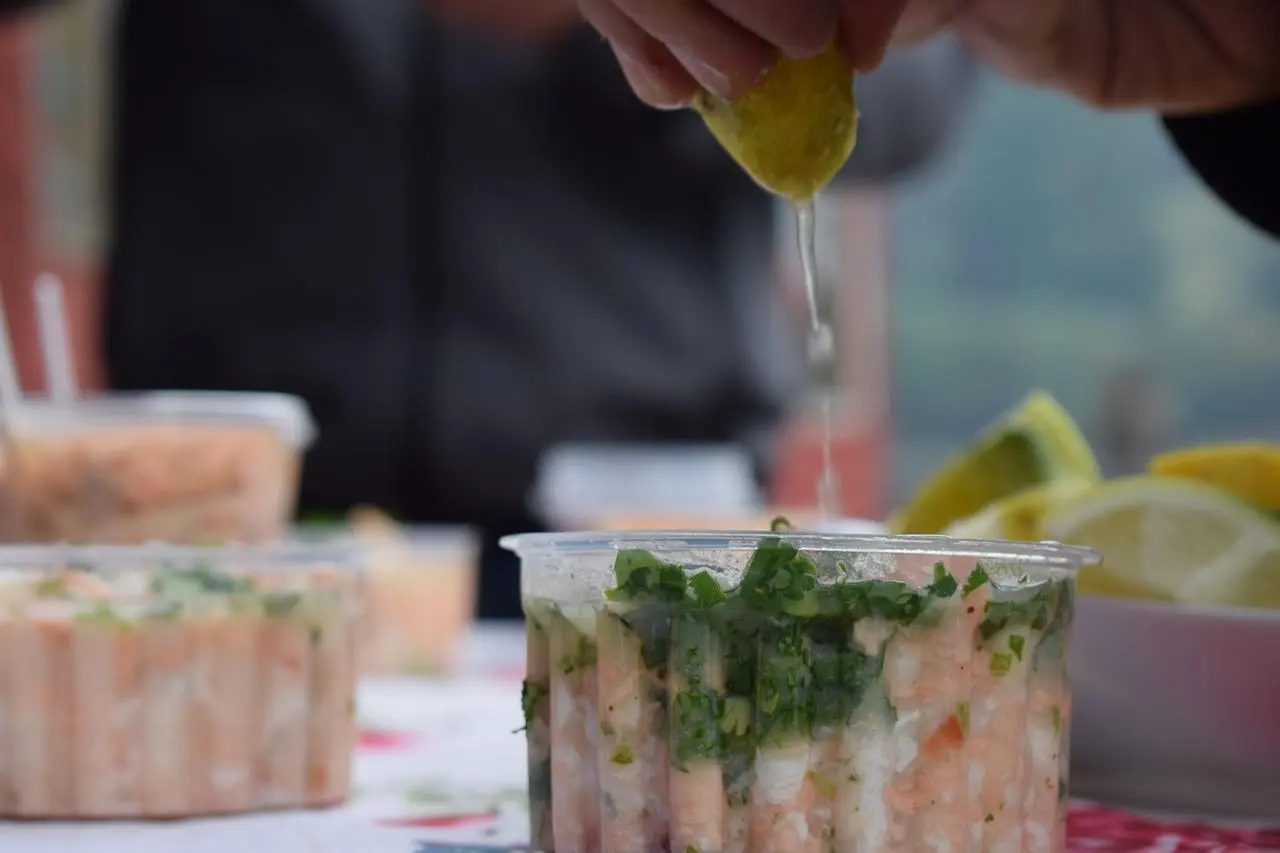
How to tell when your ceviche is ready
Your eyes are a better timer than a clock. Follow these steps and judge by the cut surface.
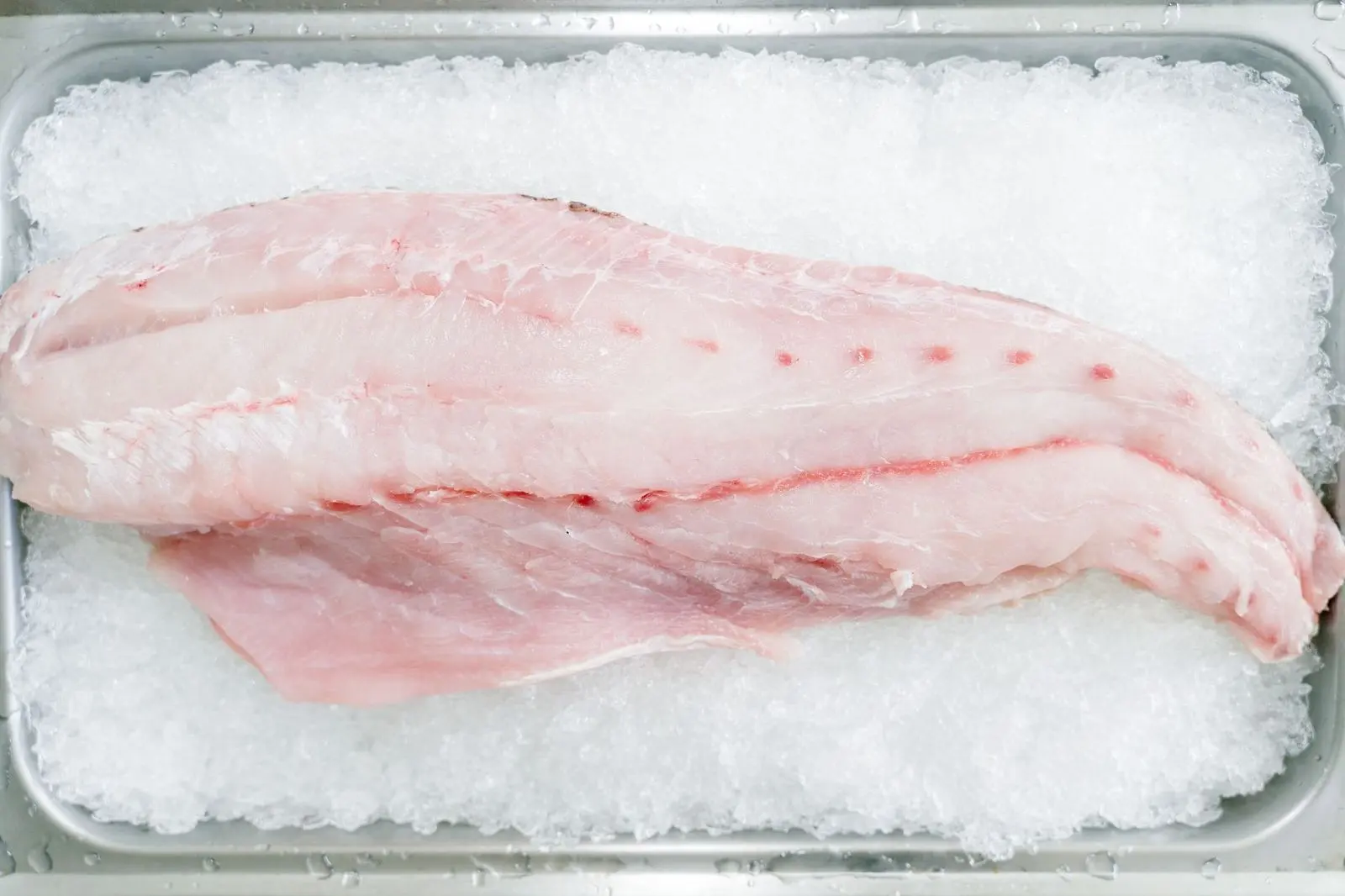
- Cut the raw fillets into small, bite-size chunks of similar size.
- Combine them with an acidic marinade, usually lime juice, and put the bowl in the refrigerator.
- After a short while, cut one piece in half and look at the center.
- If the middle is still glossy and see-through and you want that, stop there. If you prefer a firmer bite, keep marinating and check again.
- Drain and serve as soon as the texture suits you.
The reason for checking is simple: the fish keeps changing for as long as it sits in the acid. For the chemistry behind that, see our explainer on does lime juice cook fish.
Does marinating longer make fish safer?
No. America’s Test Kitchen notes that brief acid exposure has an antimicrobial effect but is not nearly as effective as heat, especially against parasites. That is why ceviche should be treated like raw fish.
Your starting fish therefore decides safety far more than your timer does. These points apply, based on the same America’s Test Kitchen article and chef Jorge Guzmán’s advice in The Takeout:
- Use saltwater fish, not freshwater, from a fishmonger you trust.
- Ask for a “sushi-grade” label if possible.
- Guzmán favors firm, white-fleshed fish such as sea bass or snapper.
- Cod and salmon can carry parasitic worms, so they are not a great choice.
- Flash-frozen fish helps kill parasites, in his experience as a chef.
Our guide to the best fish for ceviche goes deeper on picking a species. Do not serve ceviche to pregnant or immune-compromised persons, per the America’s Test Kitchen advice.
Timing mistakes that spoil ceviche
- Walking away. Fish left in acid keeps firming, and the delicate, silky feel is the first thing to go.
- Uneven pieces. Small bits turn opaque long before big ones, so you get a mix of chalky and raw.
- Leaving it out. The method calls for refrigerating the fish while it marinates.
- Holding it too long before eating. The advice is to serve it as soon as you can.
- Trusting acid to fix doubtful fish. Only use fish you would be comfortable eating raw.
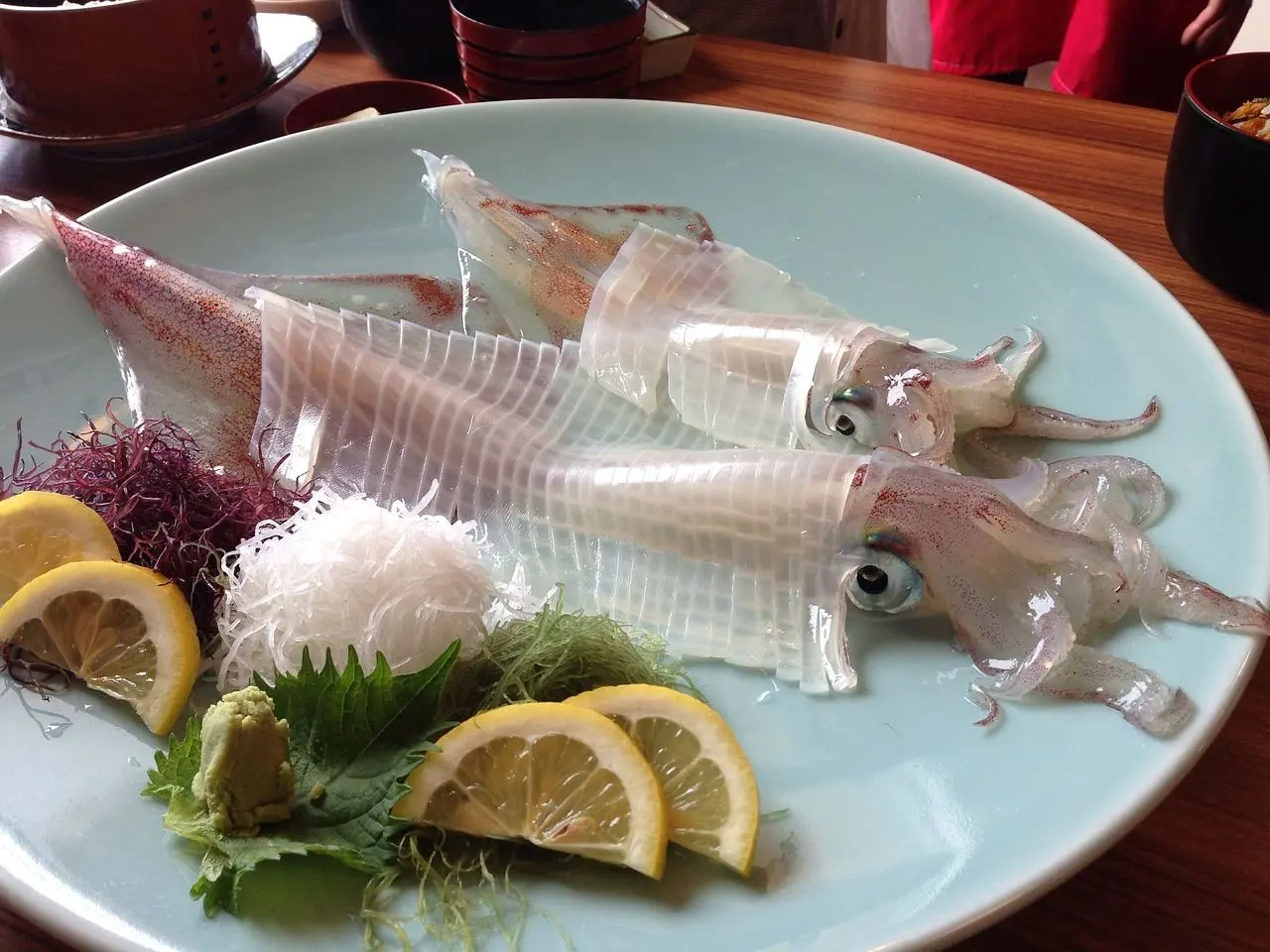
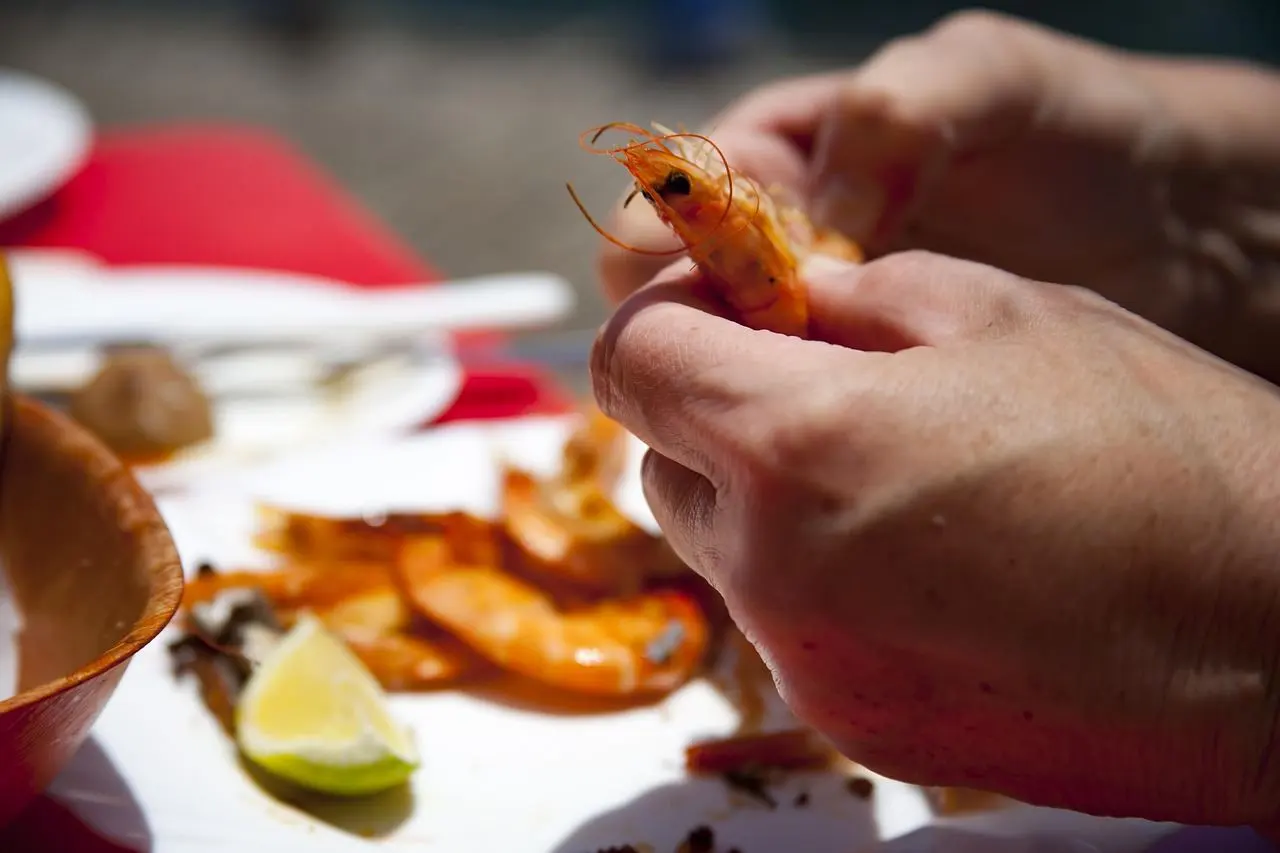
Shellfish such as shrimp, scallops and squid are also popular in ceviche, according to The Takeout. The same logic applies: watch the center, and serve promptly.
Frequently asked questions
Can ceviche marinate overnight?
Show answer
The sources only describe a window that tops out at a few hours, so an overnight soak is beyond what they support. Expect a very firm, fully opaque result if you go that far.
Why is the middle of my ceviche still see-through?
Show answer
The acid has not travelled all the way in yet. That is normal for a quick marinade, and it gives you a texture closer to raw fish.
Does the acid kill parasites in fish?
Show answer
It can slow or kill some microorganisms, but heat does the job far better where parasites are concerned. Start with fish you trust rather than relying on the marinade.
Who should avoid eating ceviche?
Show answer
Pregnant and immune-compromised people should not be served it, because it is treated like raw fish. Anyone unsure about a particular fish should skip it.