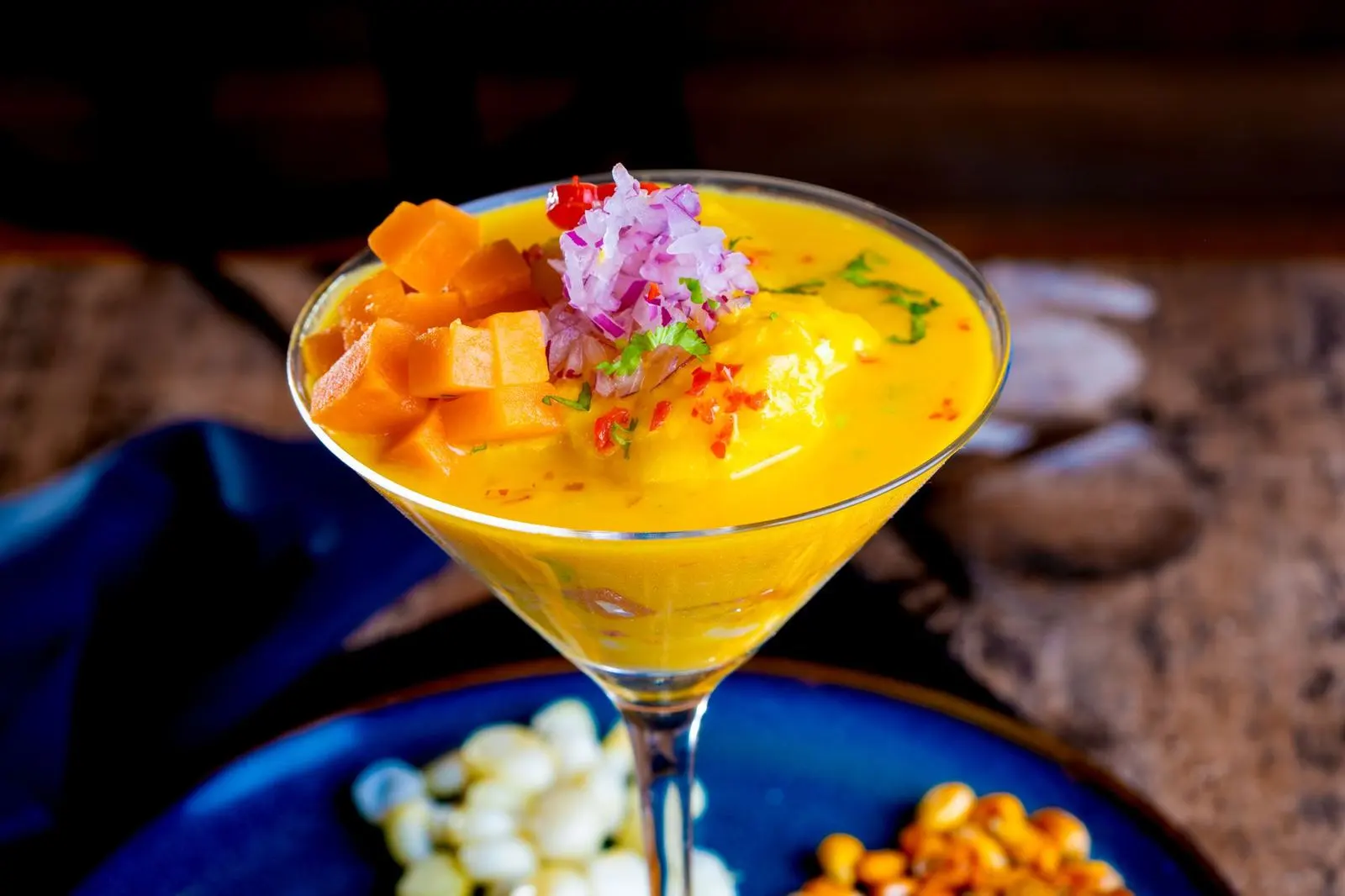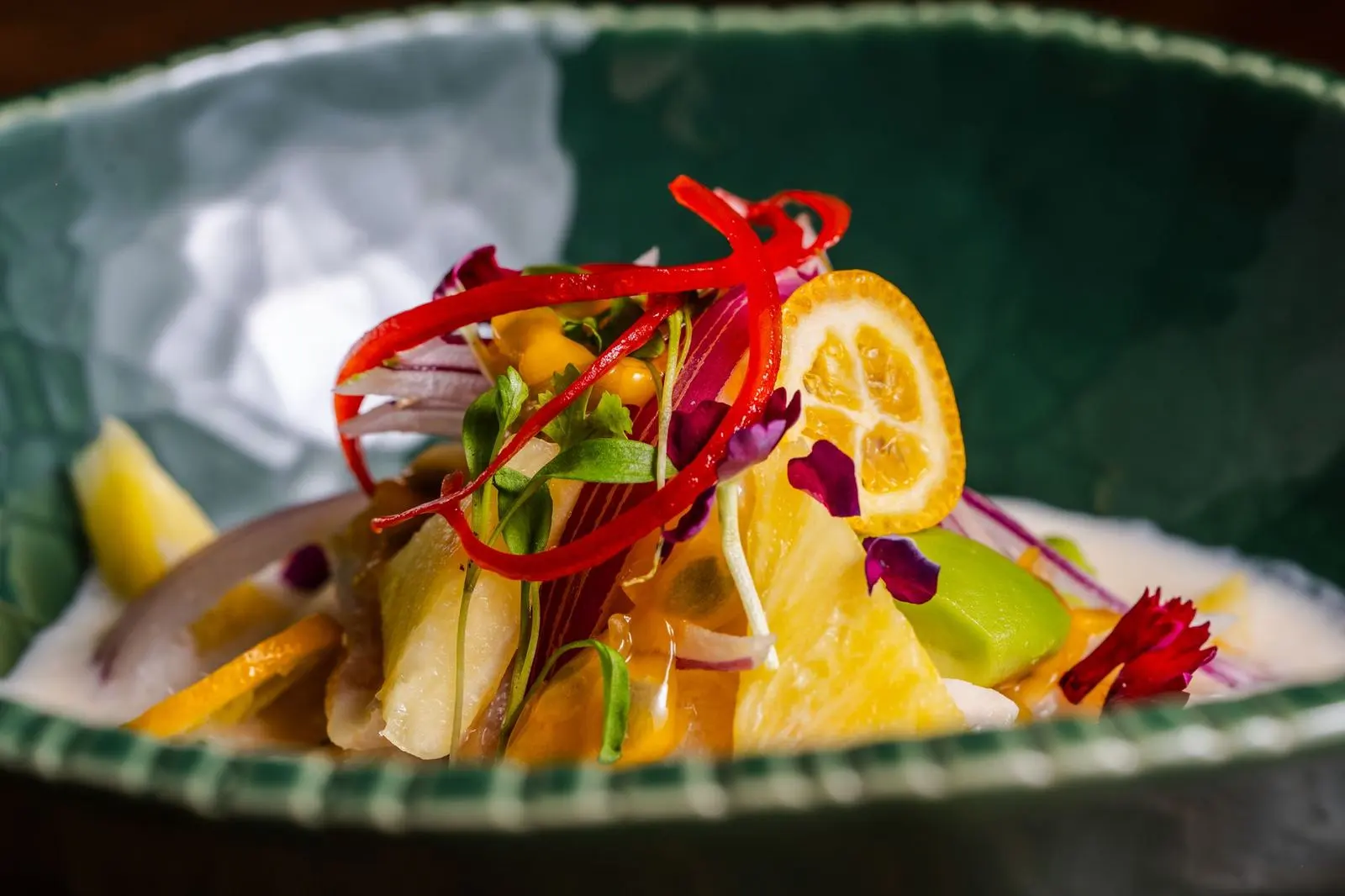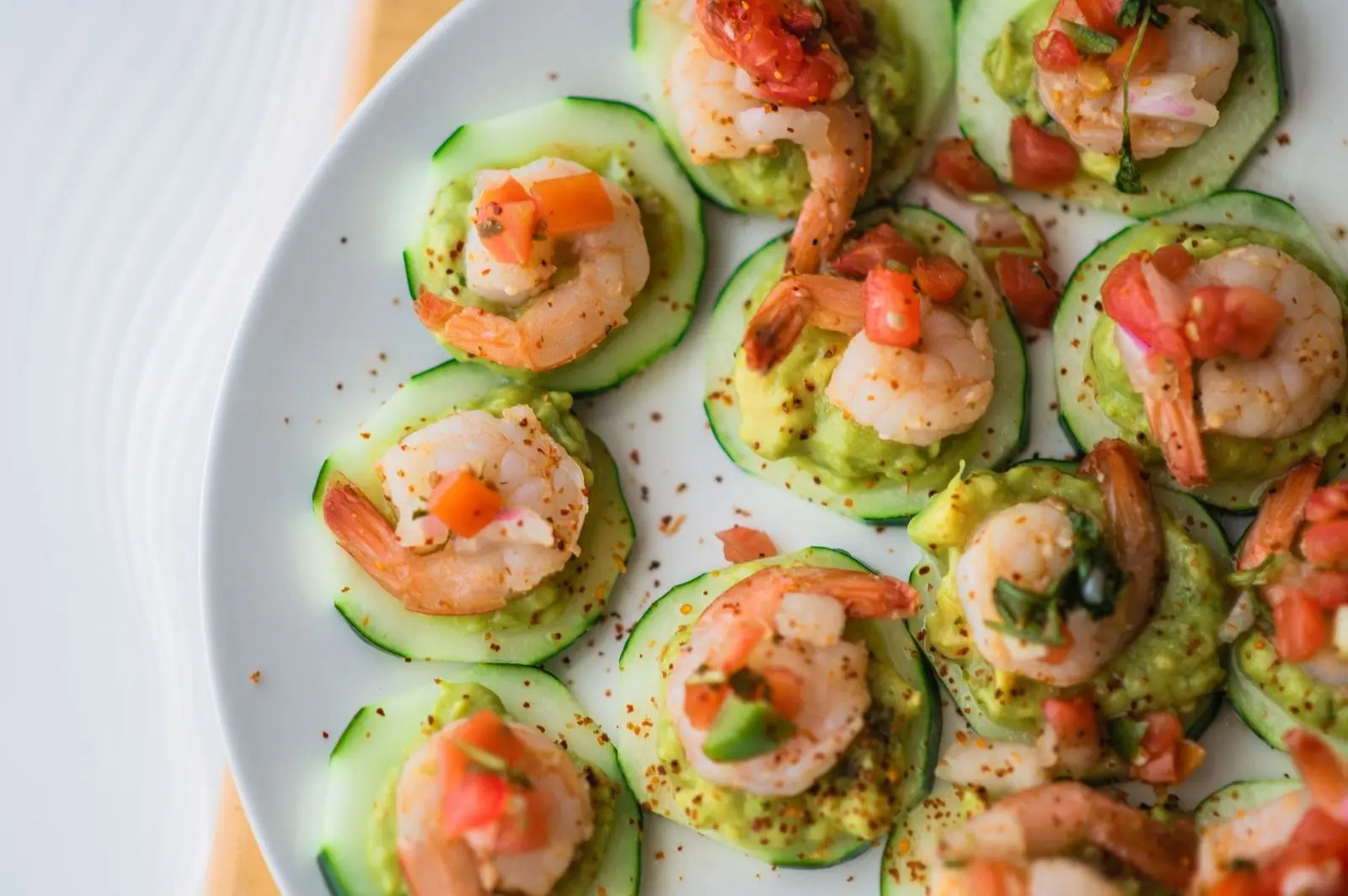
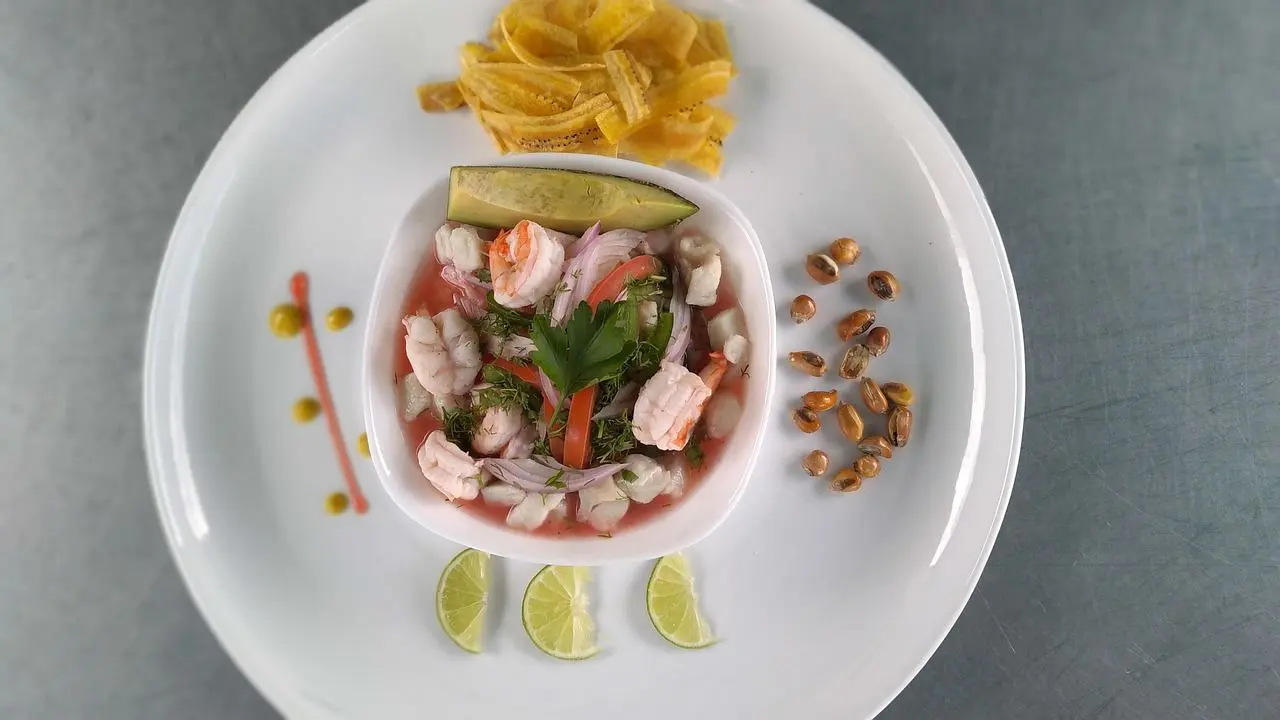
Want an Ecuadorian shrimp ceviche that tastes bright, not harsh? Poach the shrimp for seconds in their own shell stock, then bathe them in citrus, a little ketchup and tomato broth. Here is how.
You can find more dishes like this one among the ceviche recipes on this site.
| Item | Value |
|---|---|
| Shrimp | 1 lb medium or large, shell-on |
| Simmering the shells for stock | 5 minutes |
| Poaching the shrimp in the stock | about 10 seconds |
| Soaking the onion in the citrus mix | at least 10 minutes |
| Shrimp stock added to the bowl | 1/4 cup |
| Chilling time in another version | 1 to 2 hours |
The amounts and timings come from Taste’s ceviche de camarón recipe, and the chilling time from Cup of Yum. Recipes get updated and cooks adapt them, so check the source before you rely on these figures.
What makes Ecuadorian shrimp ceviche different?
Ecuadorian ceviche de camarón skips the raw-fish cure. Taste describes it as made with just-cooked shrimp, fresh orange and lime juice, red onion, cilantro and a little ketchup. That splash of ketchup brings gentle sweetness and the dish’s rosy tint.
There is a contrast with Peru too. Select Latin America says Ecuadorian ceviche differs from its Peruvian cousin by adding tomatoes and bell peppers. Because the prawns are already cooked, the same page suggests it suits anyone who feels squeamish about raw fish.
The tomato broth is where this version gets its character. Familia Kitchen simmers raw shrimp shells in water with garlic, a pinch of shrimp bouillon, sugar, ketchup and mustard. Directo al Paladar, a Spanish-language site, also builds a stock from the heads and shells and says it leaves the ceviche juicier and softer.
The dish is deeply rooted. Taste says it appears in all twenty-four provinces of Ecuador, changing with the season, and cites evidence that the first ceviches were made over three thousand years ago. Origins are still debated, so treat that as evidence rather than settled history.
Ingredients and what each one does
Start with 1 lb of medium or large shell-on shrimp, because the shells become your stock. The same Taste recipe juices 4 limes and half an orange, then adds 3 tbsp of ketchup and an optional touch of Dijon mustard.
The rest of the bowl is simple:
- Red onion, halved and thinly sliced, for sharp crunch.
- One ripe tomato, diced, for freshness.
- Cilantro, finely chopped, for an herbal lift.
- Kosher salt, added to taste.
- A ripe avocado, sliced, as an optional garnish.
Balance the orange with lime. Directo al Paladar warns that oranges in Ecuador tend to be more acidic than those usually found in Spain, so it recommends balancing them with lime to keep the ceviche from turning too sweet.
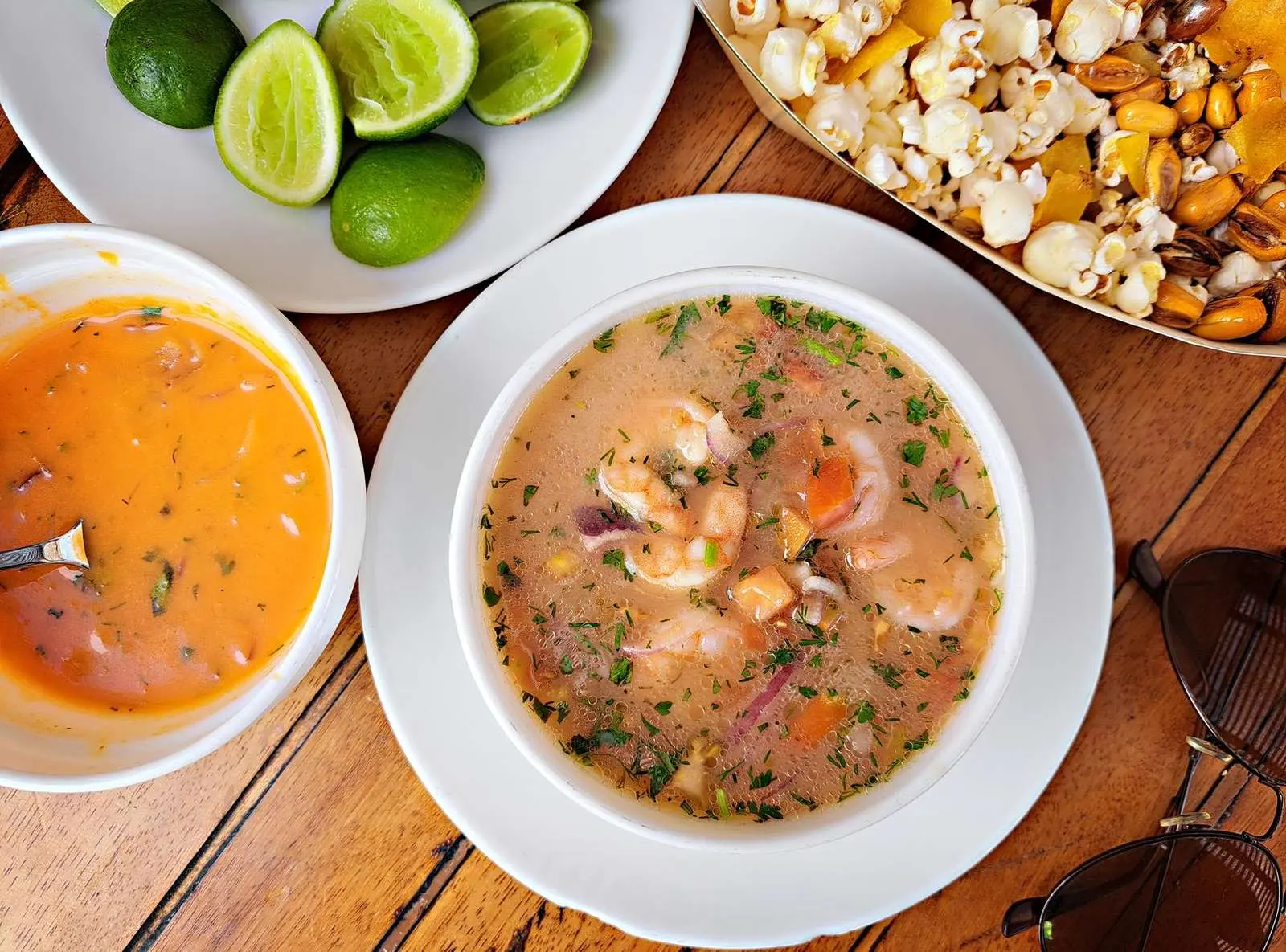
Step-by-step method
Follow this order so the shrimp never overcook. The method comes mainly from Taste, and the tomato-broth option follows the steps.
- Peel and devein the shrimp with a paring knife, saving every shell.
- Simmer the shells in a small saucepan of water for 5 minutes, then strain and keep the stock (Taste).
- Bring the stock back to a boil, add the shrimp and lift them out once they are just pink all around, about 10 seconds (Taste).
- Let the shrimp cool on a plate and set aside 1/4 cup of stock to cool (Taste).
- Mix the lime juice, orange juice, ketchup, mustard and salt, then add the onion and let it soak for at least 10 minutes (Taste).
- Stir in the tomato, cilantro, shrimp and reserved stock, then taste and adjust the salt.
- Serve at room temperature or chilled, with avocado arranged on the side of the bowl.
For the tomato broth version, cool the stock completely and blend it with a whole tomato, the reserved pulp of a second tomato and tomato sauce until fairly liquid. Directo al Paladar strains that mixture and stirs it into the bowl with the shrimp, then rests everything in the fridge so the flavors meld.
Chilling is worth the wait if you have time. Cup of Yum marinates its ceviche in the refrigerator for 1 to 2 hours, and it soaks sliced onions in salted water to mellow their sharpness before rinsing and draining them.
Variations and easy swaps
Every cook tweaks this dish, and Taste’s author says you can adjust it to your own taste with more or fewer limes, a little mustard or extra ketchup. These swaps appear in other published versions:
- Hominy: Familia Kitchen notes that one grandmother adds hominy, in keeping with the traditions of La Sierra, while the recipe’s cook prefers it without the maíz.
- Bell peppers: the same recipe chops bell peppers, red onion and tomato into small pieces before mixing.
- Oil: Cup of Yum says a drizzle of sunflower, avocado or light olive oil enhances richness.
If you like comparing regional styles, the mexican ceviche recipe is a natural next stop. For a different seafood base, octopus ceviche is worth a look.
What to serve with it
Ecuadorian cooks pair this ceviche with crunch. Taste strongly recommends chifles (plantain chips), popcorn or maíz tostado, ideally all three, alternating salty, crunchy and citrusy bites.
Other sources suggest these sides:
- White rice and chifles or fried plantains, per Familia Kitchen.
- Thick fried green plantains (patacones), toasted corn nuts or popcorn, and aji criollo hot sauce, per Cup of Yum.
- Salted popcorn and cold beer, per Select Latin America.
On the coast, Familia Kitchen says ceviche is enjoyed all year round and traditionally eaten on weekends for breakfast or brunch. That makes it a good fit for a relaxed late-morning table.
Frequently asked questions
Is Ecuadorian shrimp ceviche made with raw shrimp?
Show answer
No. Taste says Ecuador’s version doesn’t fully follow the usual raw-and-cured approach, because the shrimp are briefly cooked in stock before they meet the citrus.
Can I make it ahead of time?
Show answer
Plan to eat it the day you make it. Taste says the dish is best eaten the day it’s made and scales down as easily as it scales up, so a smaller batch is a sensible choice.
Is there a vegetarian version?
Show answer
Yes. Ceviche de chochos is a very common variation in Ecuador, and Taste explains that lupini beans replace the seafood, which makes it fully vegan. You simply leave out the shrimp and the stock.
What can I do with the leftover shrimp stock?
Show answer
Taste only says to store it for another use. Cup of Yum adds that broth from cooking shrimp can enrich the marinade, so a spoonful may help if your bowl tastes flat.