Want a Mexican ceviche recipe that tastes bright and is safe to serve? Start with very fresh saltwater fish, marinate it in lime juice briefly, then fold in tomato, avocado, onion and cilantro just before serving.
This recipe is part of our collection of ceviche recipes.
| Item | Value |
|---|---|
| Traditional marinating time | Up to 30 minutes |
| Fish in the tested formula (mahi-mahi) | 680 g |
| Lime juice in the tested formula | 236 g |
| Red onion in the tested formula | 50 g |
| Habanero in the tested formula | 6.2 g |
| Listeria monocytogenes cells still viable after preparing the dish | 98.54% |
These figures come from a food microbiology study on ceviche as a natural preservative. Figures can change, so check the source before you rely on them.
What goes into Mexican-style ceviche
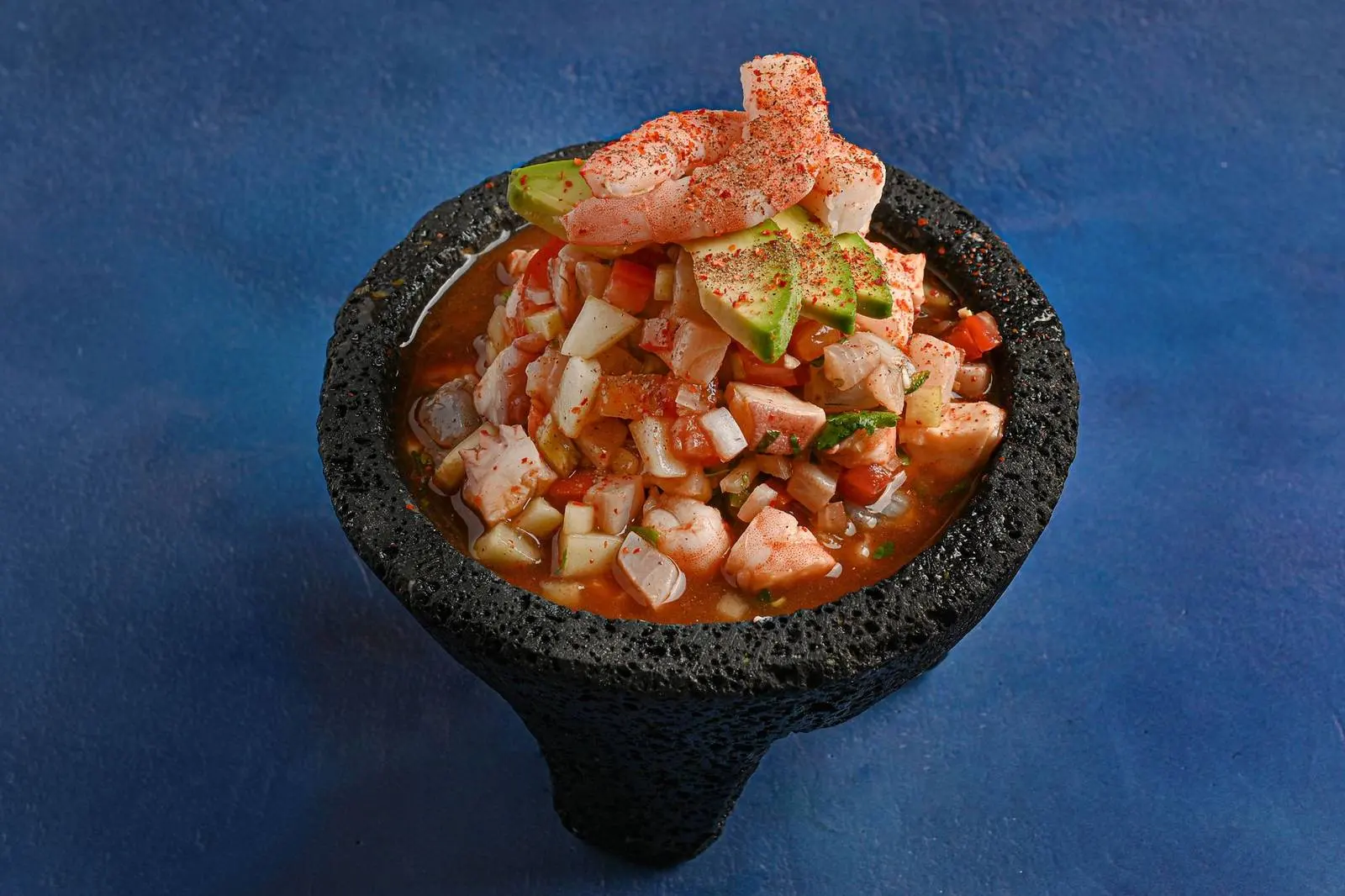
Mexican-style ceviche usually leans on diced tomato and creamy avocado for body, with lime for sharpness. The fish is the star, so everything else should stay fresh and cold.
- Skinless, boneless fillets of a firm saltwater fish, cut into small bite-size pieces
- Plenty of fresh lime juice, squeezed just before using
- Ripe tomato, seeded and diced
- Red onion, finely chopped
- Fresh chile (serrano, jalapeño or habanero), finely minced
- Cilantro, chopped
- Ripe avocado, diced, added at the end
- Salt to taste
Choose fish you would be happy to eat completely raw, because the marinade does not replace cooking. Keep the pieces small and even so the lime juice reaches them at the same pace.
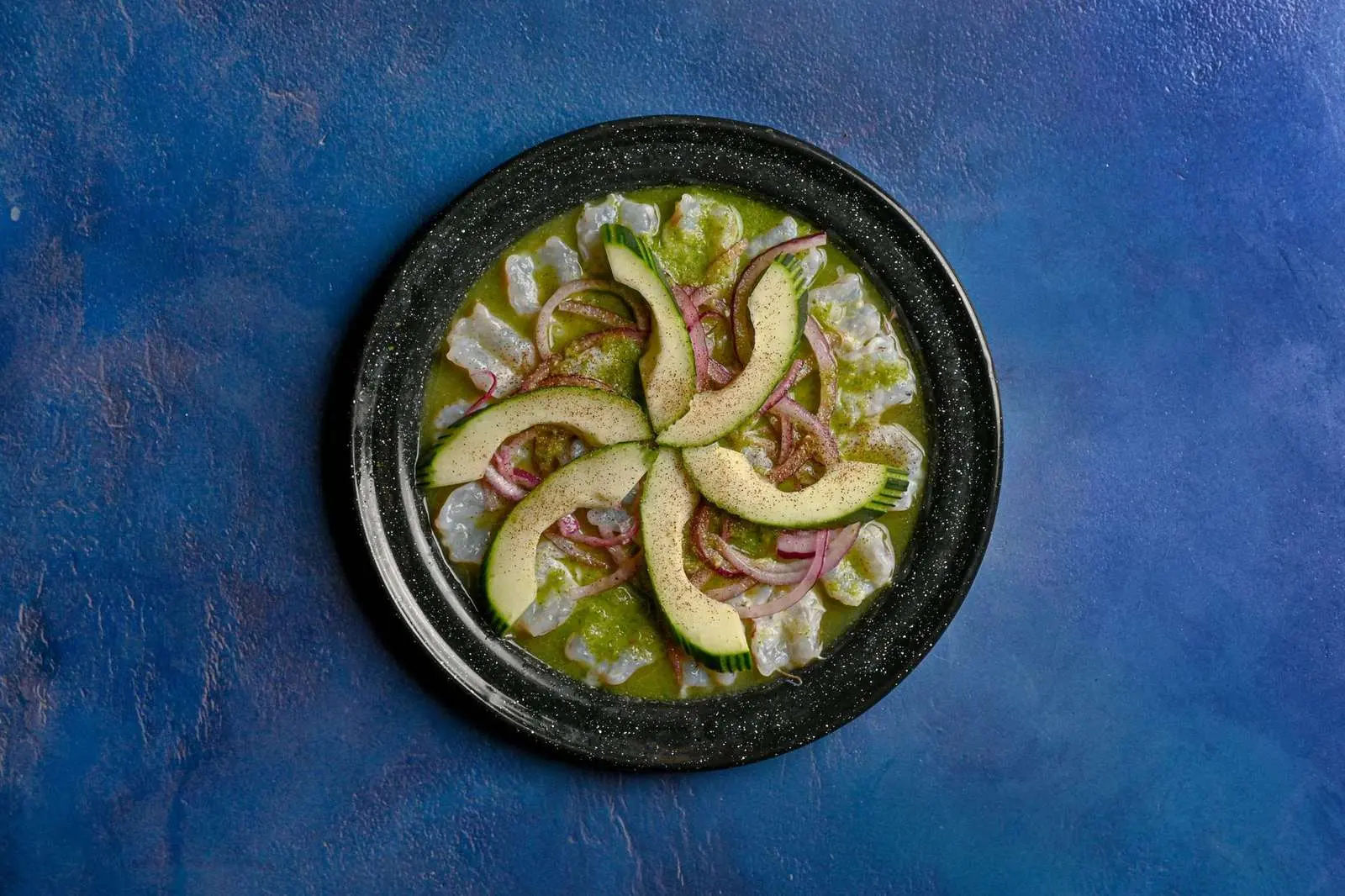
Step-by-step method
- Chill the fish well, then cut it into small, even pieces and place them in a non-reactive glass or ceramic bowl.
- Pour over enough lime juice to coat every piece, add a pinch of salt and stir gently.
- Cover and refrigerate, stirring once or twice so the surfaces marinate evenly.
- While the fish rests, dice the tomato, onion and chile and chop the cilantro.
- Drain off a little of the excess juice if the bowl looks swimming, then fold in the tomato, onion, chile and cilantro.
- Add the avocado last, stir once, taste for salt and lime, and serve right away.
Serve it cold, with tostadas, crackers or tortilla chips, and keep the bowl on ice if it sits on the table for a while.
How long should the fish marinate?
Traditional recipes marinate raw fish in citrus juice for up to 30 minutes, according to a peer-reviewed study of ceviche. That is long enough to change the look and feel of the fish, though it is a short window by food-preservation standards.
The change happens because acid reaches the muscle proteins. As America’s Test Kitchen explains, the myosin proteins in the fish coagulate, bonding together and making the muscle firmer and opaque.
A brief soak transforms only the outside of each piece. In the same America’s Test Kitchen explanation, the centers of briefly marinated pieces stay translucent, while a longer soak turns the fish opaque all the way through and firmer in texture.
So your timing is a matter of taste: shorter for a tender, almost sashimi-like bite, longer for a firmer, more “cooked” feel. Whichever you choose, keep the bowl in the fridge the whole time.
What a lab-tested ceviche formula looked like
Researchers in Poland prepared a ceviche with 680 g of mahi-mahi, 30.8 g of coriander, 50 g of red onion, 6.2 g of habanero and 236 g of lime juice, marinated together for 30 minutes, as described in the published methods. That works out to a very generous amount of lime juice relative to the fish.
You do not need to weigh your ingredients to match it. The point is the pattern: lots of citrus, a modest amount of onion and chile, and herbs as a finishing touch. Adding tomato and avocado, as in this version, simply makes the dish heartier.
Is ceviche safe to eat?
Lime juice helps, but it does not sterilize. In the same study, about 98.54% of Listeria monocytogenes cells were still viable after the ceviche preparation process, as reported in the study’s abstract.
The researchers also tested the ingredients on their own. Habanero and coriander showed no bactericidal effect, while 99.11% of cells stayed alive with onion and 97.26% with lime juice, according to the same paper.
America’s Test Kitchen puts the practical lesson plainly: ceviche is only as safe as the fish you start with. Acid has an antimicrobial effect, but it is far less effective than heat, especially against parasites.
Use these habits to lower your risk:
- Buy saltwater fish, not freshwater, from a fishmonger you trust, and ask for a “sushi-grade” label if possible.
- Keep the fish refrigerated until the moment you cut it.
- Serve it as soon as you can after mixing.
- Do not serve it to pregnant or immune-compromised people.
All of these points come from that America’s Test Kitchen answer, apart from the refrigeration habit, which is simply good kitchen practice.
Serving ideas and variations
Spoon the ceviche onto crisp tostadas, or serve it in a glass with chips on the side. A squeeze of extra lime, a few drops of hot sauce and a little more cilantro wake it up just before it reaches the table.
If you would rather work with shellfish, our shrimp ceviche recipe covers that route. For a South American take with a different flavor profile, try the ecuadorian shrimp ceviche.
Frequently asked questions
Can I make Mexican ceviche ahead of time?
Show answer
Prepare the chopped vegetables and chill the fish separately, then combine them shortly before guests arrive. Add the avocado at the very end so it stays green and firm.
Which fish works best?
Show answer
Pick a firm, mild saltwater fish that your fishmonger confirms is fine to eat raw. The tested formula in the study used mahi-mahi, and freshwater species are best avoided.
Does lime juice really “cook” the fish?
Show answer
Not in the way heat does. The acid firms and whitens the muscle, but the fish remains raw, so treat it with the same care as sashimi.
Can children or pregnant guests eat it?
Show answer
Pregnant and immune-compromised people should skip it, per America’s Test Kitchen’s guidance. Offer a fully cooked alternative to those guests instead.