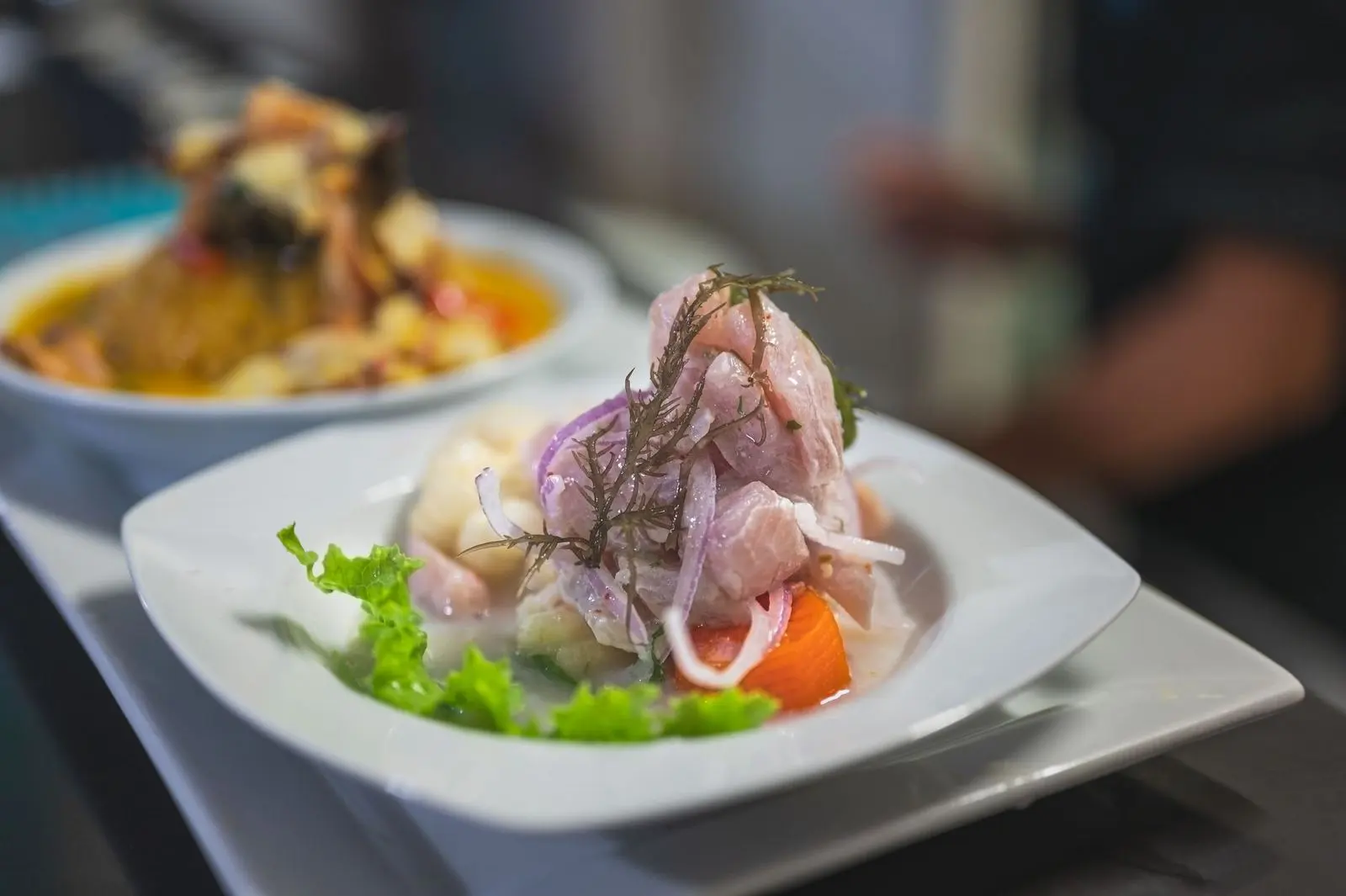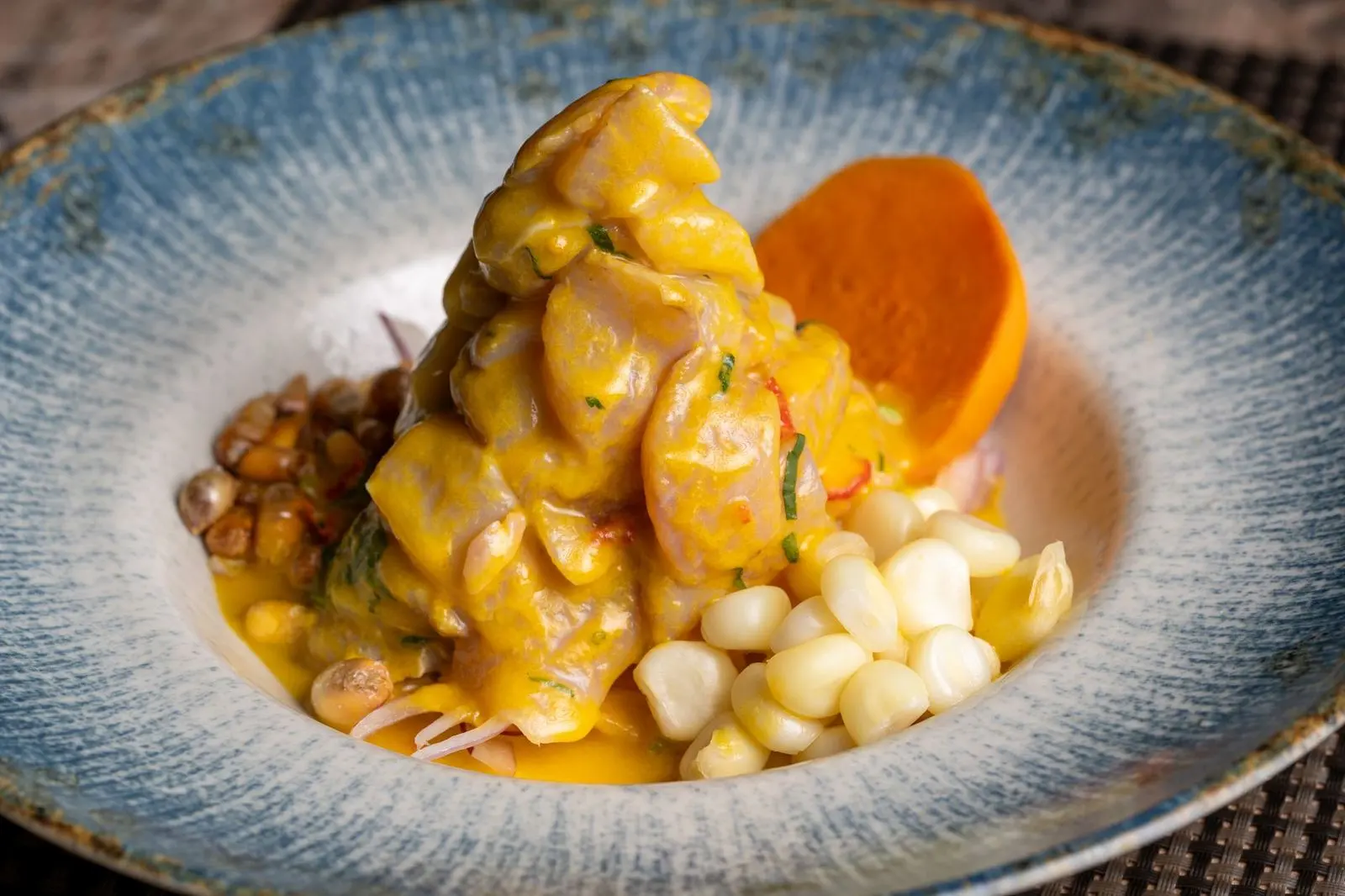
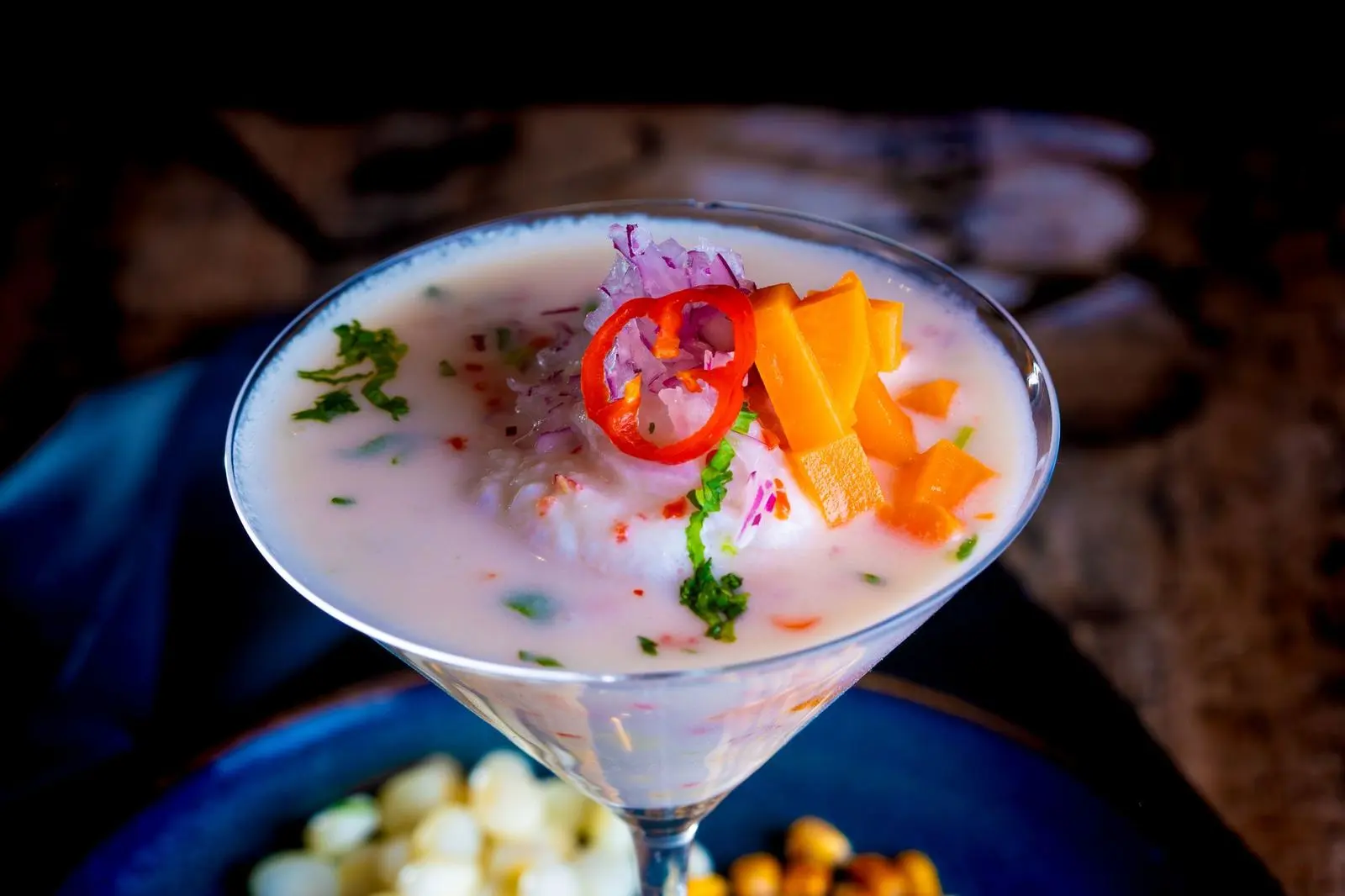
Craving the zesty glass of marinade a Peruvian cevichería serves with your fish? This leche de tigre recipe is simple: blend lime juice, raw fish, red onion, garlic, cilantro stems, celery and ginger, then strain.
For more dishes from the same tradition, browse the wider guide to peruvian cuisine.
| Item | Value |
|---|---|
| Name meaning | Tiger’s milk (leche de pantera is panther’s milk) |
| Texture | Milky white, finely blended and strained |
| How it is served | A small glass, as an appetizer |
| Modern ceviche marination | About 45 minutes |
| Old fisherman’s marination | 12 to 24 hours |
| UNESCO recognition of ceviche | December 2023 |
These figures come from Wikipedia’s Peruvian ceviche entry and National Geographic’s ceviche history. They can change, so check the sources before you rely on them.
What leche de tigre is
Leche de tigre is the citrus marinade that pools around ceviche. As Wikipedia’s entry on Peruvian ceviche describes it, most cevicherías in Peru pour a small glass of it alongside the fish, and it also goes by the name leche de pantera.
National Geographic explains how it forms: the proteins in the fish coagulate, the flesh turns firmer and opaque, and the lime mingles with the other ingredients into a fiery liquor. That liquor is the tiger’s milk.
The glass is also a mark of style: the Wikipedia entry says this appetizer differentiates Peruvian ceviche from other Latin American versions.
Ingredients for a classic leche de tigre
The same Wikipedia entry names a milky white, finely blended and strained mix built from these ingredients:
- Freshly squeezed lime juice, the acid base
- Raw fish, which gives the liquid body
- Red onion
- Garlic
- Cilantro stems
- Celery
- Ginger
Add salt and a chili as well. National Geographic notes that today’s best-known ceviches are dressed in a base of lime juice, salt, chilli and onion, and a chili is what makes the milk fiery.
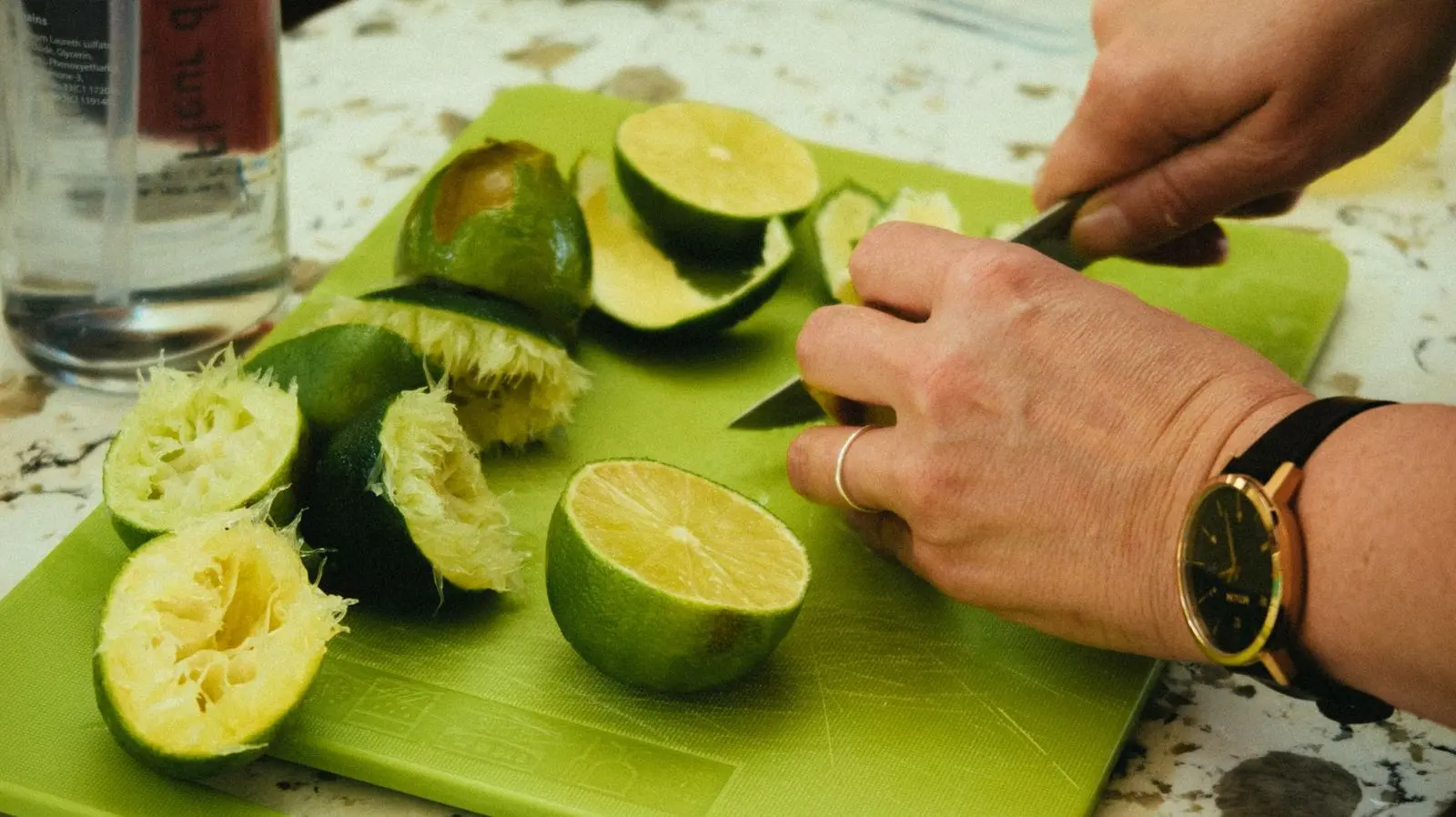
Your limes matter too. National Geographic points out that, unlike the Persian limes mostly used in Europe, Peruvian limes are small and sharp, so taste your juice before you build the glass around it.
How to make leche de tigre, step by step
The sources describe a mixture that is blended and then strained, so the method is short and needs no heat. They give no exact ratios, so treat lime juice as the main body, add the other ingredients in smaller amounts and taste as you go.
- Squeeze the limes and pick out any seeds.
- Roughly chop the red onion, garlic, celery, ginger and cilantro stems so the blender can handle them.
- Put the chopped aromatics, the raw fish, a chili and a pinch of salt into the blender with the lime juice.
- Blend until the liquid turns milky and smooth.
- Pour it through a fine strainer, pressing the solids to release the liquid.
- Taste, then adjust the salt, lime and chili until it is sharp but balanced.
Serve it in small glasses next to ceviche, or spoon it over the fish. Make it fresh, since the point is a bright, lively marinade rather than something that has sat around.
Twists on the classic
The Wikipedia entry lists regional ceviche variations that include garlic, fish bone broth, minced ají limo, or the Andean chili rocoto. They are described for ceviche as a whole, but they make good flavor ideas for your own glass.
Start with one change at a time, so you can tell what each addition does. A fish bone broth swap for part of the liquid suits a deeper, savory version, while a different chili changes the heat and fruitiness.
How long should fish sit, and is it safe?
Marination times have shifted a lot. Chef Mitsuharu Tsumura tells National Geographic that fishermen’s ceviche was once left in lime juice for 12 to 24 hours, until the fish could taste like chicken.
The modern style is much quicker. Wikipedia’s entry says it uses about 45 minutes, was developed in the 1970s by Peruvian-Japanese chefs, and that some elite restaurants use a citrus bath of only five minutes.
The same entry adds that experts suggest a minimum of 15 minutes to kill bacteria. Yet Wikipedia’s separate ceviche entry states that acid marination does not kill pathogens the way true heat-cooking does.
Given that disagreement, treat any fish in your leche de tigre as raw. Use the freshest fish you can find, keep it cold and skip the dish for anyone who should avoid raw seafood.
Where leche de tigre fits in ceviche’s story
Nobody knows exactly where the dish began, and the full debate is covered in this look at the origin of ceviche.
What is clearer is the modern chapter. Wikipedia’s entry notes that UNESCO recognized ceviche as an Intangible Cultural Heritage of Humanity in December 2023, which raised the dish’s global profile.
The sliced-and-sauced cousin tiradito also travelled abroad: National Geographic reports that in 1987 Nobu Matsuhisa’s Los Angeles restaurant was one of the first to serve it. If you want to try that dish, the tiradito recipe is a good next step.
Frequently asked questions
What is leche de tigre made of?
Show answer
Citrus is the base. Blend it with some raw fish and aromatics such as onion, garlic, celery, ginger and herb stems, then strain.
Can you drink it on its own?
Show answer
Yes. Sipping it as a starter is normal practice in Peru’s cevicherías, according to Wikipedia.
Does lime juice really cook the fish?
Show answer
No. The citric acid denatures the protein molecules, so the flesh turns opaque and firm and looks cooked, yet it is still structurally raw.
Which fish suits ceviche?
Show answer
The sources name fish for ceviche rather than for the milk itself. Corvina (sea bass) was traditional, and sole is often used in Lima.