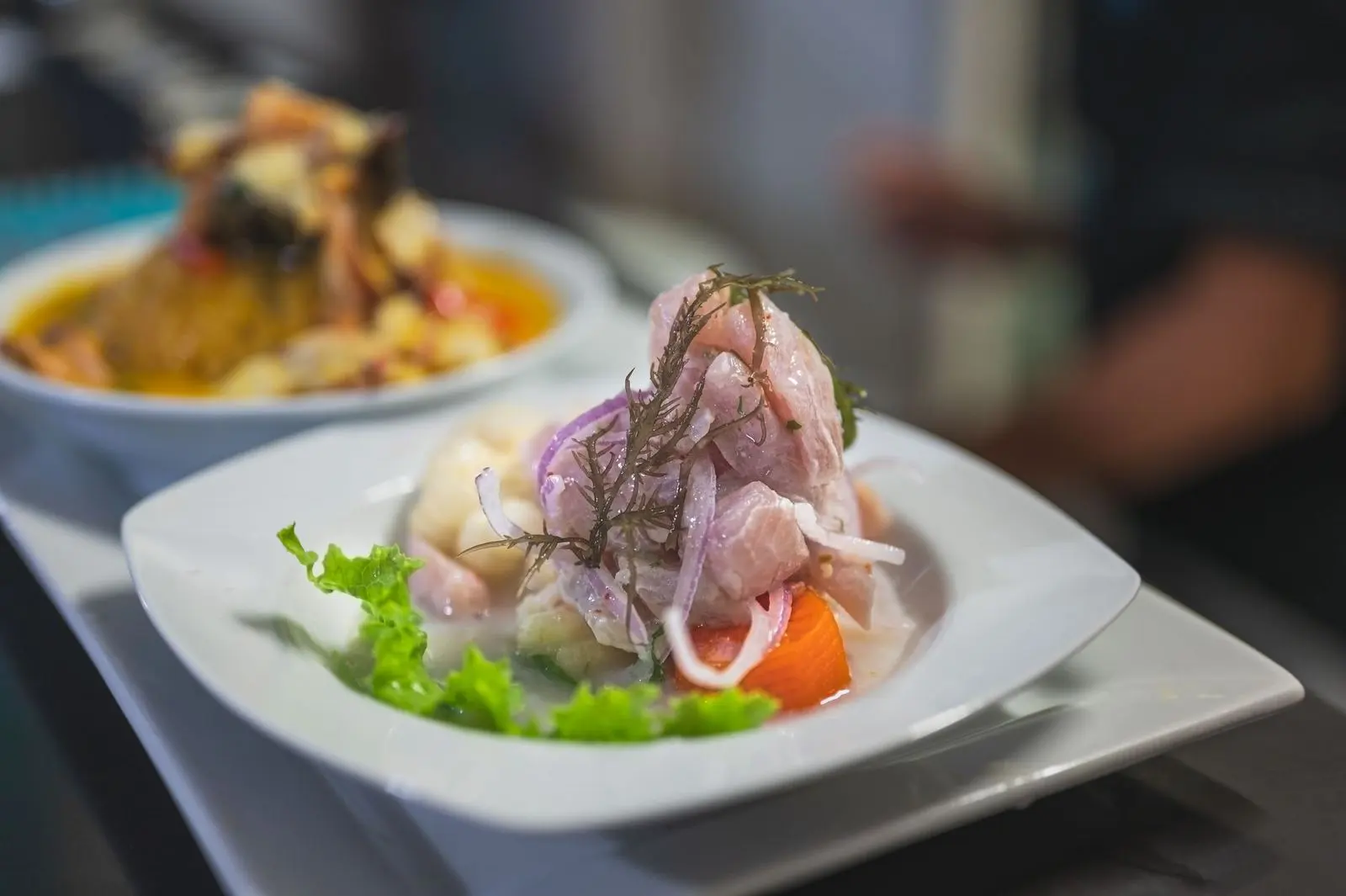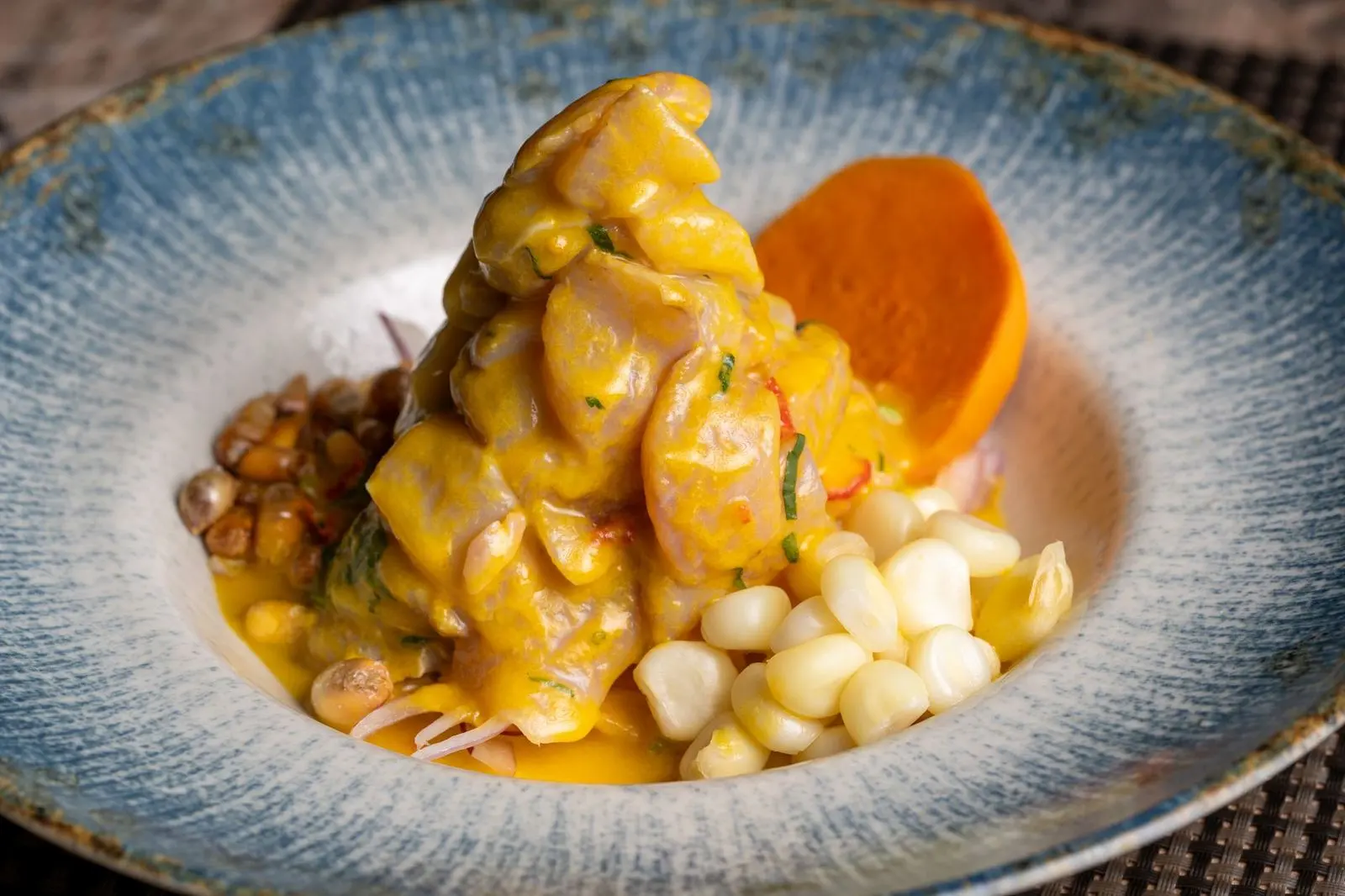
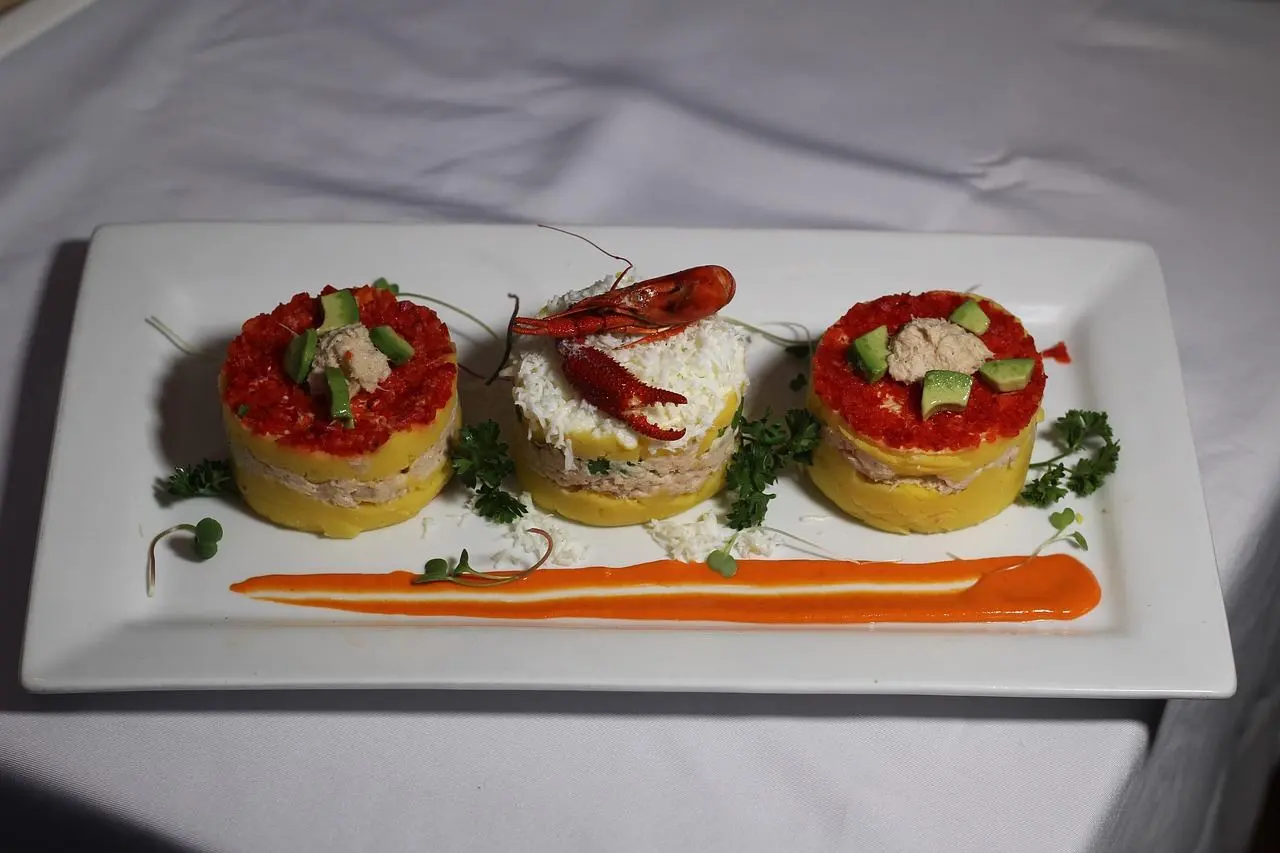
Want mashed potato that looks like a dinner-party centerpiece? This causa limena recipe layers lime-bright, chili-spiced yellow potato around a tuna or chicken filling, then chills it until it slices cleanly.
This page sits inside the wider guide to peruvian cuisine, where cold starters like causa have their own place.
| Item | Value |
|---|---|
| Serving temperature | Cold |
| Fridge holding time | Up to 12 hours |
| Potato layer height | About 1 inch |
| Potato simmer time (small potatoes) | About 25 minutes |
These figures come from the Eat Peru causa de atún recipe and the TASTE vegan causa recipe. Recipes get revised, so check the sources before you rely on them.
What causa limeña actually is
Causa is best described as a mini-casserole: yellow potato forms the top and bottom, and the filling is typically white meat, according to Wikipedia’s causa limeña entry. The same entry says the dish is traditionally made with yellow potato, lemon, boiled egg, yellow chilli pepper and black olives. It is served with a light coating of mayonnaise.
The TASTE vegan causa recipe describes the modern dish as a chilled, citrusy, spicy potato puree that is popular in Lima. Its earlier form changed after colonization brought ingredients such as dairy and citrus, which Lima’s street food vendors added to their wares, as TASTE’s history of the dish explains.
Eat Peru adds that potatoes are native to Peru and are an ever-present fixture in many Peruvian recipes. That is why a potato dish sits so comfortably at the heart of the cuisine.
Ingredients that make the difference
The potato does the heavy lifting. Creole cooks mixed salt, aji amarillo, olive oil and lime juice into the mashed papa amarilla, Peru’s starchy yellow potato, giving it a creamy consistency and a bright yellow color, according to TASTE.
Outside Peru, Eat Peru suggests floury or fluffy local potatoes to get the same consistency. The TASTE writer boiled medium-size papa amarilla or Yukon Gold potatoes in the same history piece.
The yellow chili is the second pillar of flavor. The site’s guide to aji amarillo paste covers that ingredient in its own right.
A typical shopping list is short:
- Potato base: yellow or floury potatoes, boiled and riced.
- Seasoning: salt, aji amarillo, lime juice and oil.
- Filling: tuna or shredded chicken, bound with a little mayonnaise.
- Middle layer: sliced avocado.
- Garnish: hard-boiled egg and black olives.
How to make causa limeña step by step
Exact quantities differ between published recipes, so the steps below describe the method and leave final seasoning to your taste.
- Cover the potatoes with cold water, bring to a boil and simmer until tender. Small potatoes take about 25 minutes, until the skin begins to crack and separate, per the TASTE recipe.
- Peel the potatoes by hand while they are still warm but cool enough to handle, then pass them through a ricer. Eat Peru suggests ricing three times until the dough is smooth and soft.
- Season the mash with salt, aji amarillo, oil and lime juice, then taste and adjust. The puree should be creamy, smooth and able to hold its shape, according to the TASTE recipe.
- Prepare the filling: flaked tuna or shredded chicken, mixed with a little mayonnaise and chopped onion.
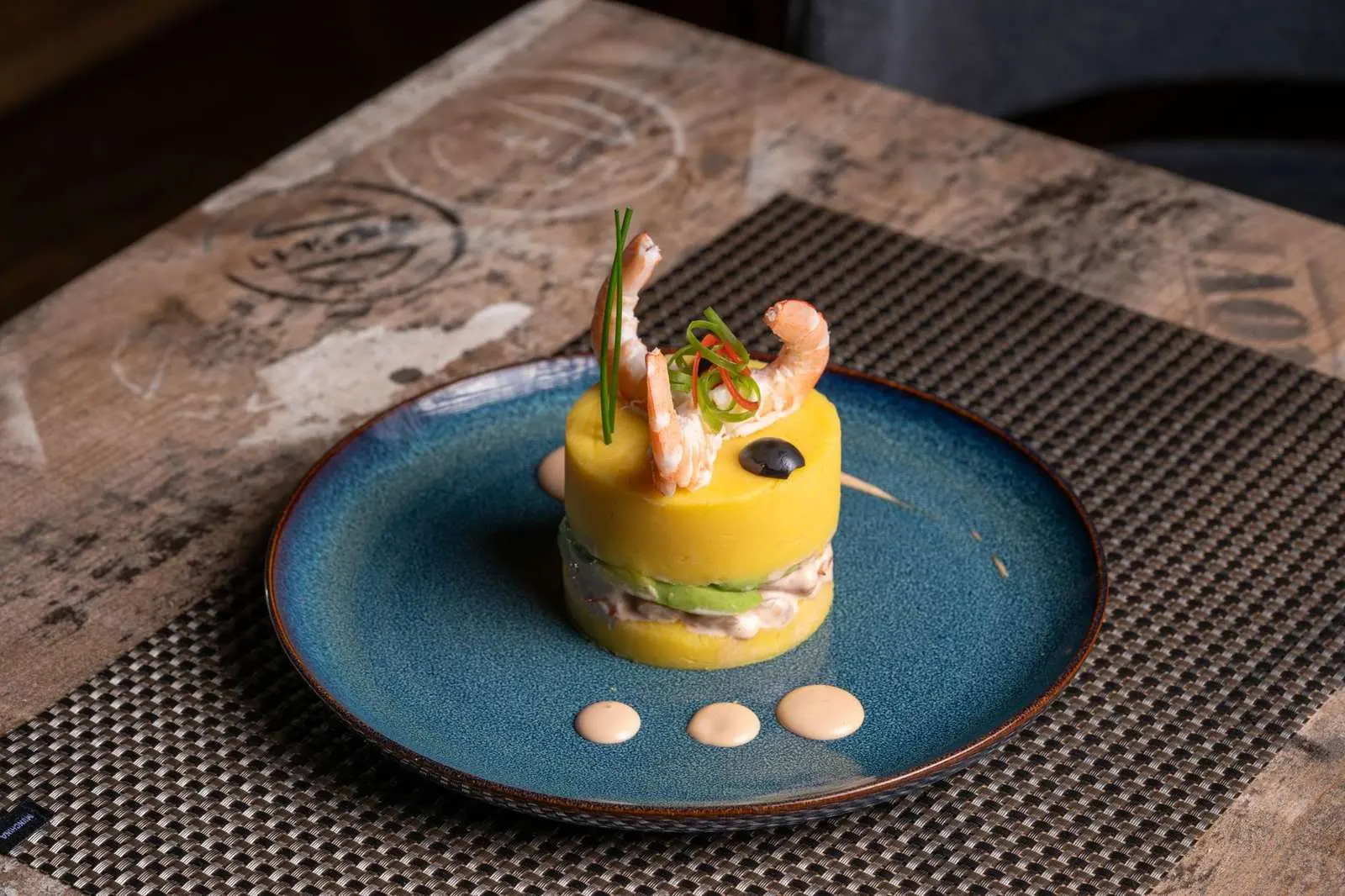
- Build each portion in a greased mini-springform pan: a potato layer about 1 inch high, then avocado slices, then the filling, then another potato layer, following the Eat Peru method.
- Chill, unmold and decorate with hard-boiled egg, as in the El Comercio recipe.
The chicken version follows the same path. The El Comercio recipe mixes the cooked chicken with mayonnaise, onion and salt in a separate bowl, then covers the filling with a second layer of potato and decorates it with hard-boiled eggs, as the chef’s recipe shows.
Fillings, colors and shapes
The original recipe was made with a central layer of shredded fish fillet. Tuna fillet or chunks often replace it to save time, Eat Peru notes, and shredded chicken breast with mayonnaise is almost as popular as the tuna variant.
Beyond those two, the possibilities are wide:
- Seafood: ceviche, crabmeat and prawns with mayonnaise, per Eat Peru, or even spider crab or octopus, per Wikipedia.
- Plant-based: the TASTE recipe notes the dairy-free puree is already vegan, and a chickpea salad makes the whole dish plant-based.
- Different dough: Wikipedia says the dough can also be made with lima beans or yellow yuca instead of yellow potatoes, so check the entry for the details.
Color is easy to change too. Adding some boiled beetroot makes the dough pink or purple, and spinach gives it a green tinge, according to Eat Peru.
Restaurants in Lima now serve individual circular cakes with multiple layers of seafood filling, mayonnaise, avocado, tomatoes and eggs, much like a stacked club sandwich. Others plate small purple potato cylinders with bite-size toppings along a long sharing plate, as TASTE describes.
Where does the name causa come from?
The most common explanation points to the Quechua word kawsay, which Wikipedia glosses as “necessary sustenance” and “food”, a name also given to the potato.
A second story dates the dish to 1820, when a group of women looked for ways to help the soldiers of the Liberation Expedition with basic purchases such as medicine, clothing and food, as El Comercio recounts.
A third account ties it to the War of the Pacific, which Eat Peru describes as the time when Peru and Bolivia were at war with Chile. Wikipedia likewise says it may have been a patriotic dish during that conflict. Because the accounts differ, treat any single origin story as folklore rather than settled fact.
One more wrinkle: in the northern city of Trujillo, the name is used to designate any spicy dish, according to Wikipedia’s causa entry.
Serving, storing and pairing
Serve causa cold. Eat Peru says it keeps in the fridge for a few hours, up to a maximum of 12 hours, though the flavor is best when it has just been prepared.
A cook raised in Lima, writing for TASTE, takes the opposite view. He found that a few hours of refrigeration gave a firmer, lighter bite and a cold, spicy kick.
Both views are worth testing: make one portion early and one at the last minute, and see which texture you prefer. For a drink on the same table, the pisco sour recipe is a natural next page to open.
Frequently asked questions
Can you make causa limeña without mayonnaise?
Show answer
Yes. Eat Peru says the recipe still works for vegan eaters when the mayonnaise is left out, and the TASTE version uses a chickpea salad for a fully plant-based result.
Which potatoes work best if you cannot find papa amarilla?
Show answer
Look for a floury type. When a reader asked, Eat Peru answered that Maris Piper and King Edward are both floury types of potato.
How is causa different from ordinary mashed potato?
Show answer
The TASTE writer argues for adding a flash of citrus and spice to mashed potatoes before chilling them. That chilled, lime-and-chili approach is what separates causa from the butter-laden version served warm.
Does causa have to be layered?
Show answer
No. The dough is pliable and firm at once, so cooks roll it into balls, shape it like a roulade or serve it in individual rings, sometimes with a sauce over the top.